Sunday, August 4, 2013

Plants are finally turning Monsanto's dreams into nightmares.

                                                                         Image Source

Prevent Disease .com


Amaranth Plants Are Now Succeeding Where GMO Activists Are Failing - They Are Resisting Monsanto's Glyphosate
Nature has a funny way of always coming on top and the Amaranth plant is a perfect example. All anti-GMO activism has led to little resistance against the powerful lobbyists at Monsanto and their dominion over government policy. But Amaranth is showing the biotech giant you can't mess with nature without consequences.
A Superstar of the Plant Kingdom
The Amaranth is a plant well known to our ancestors, since the Incas considered it a sacred plant. Ancient amaranth grains were cultivated on a large scale in ancient Mexico, Guatemala, and Peru. In a 1977 article in Science, amaranth was described as "the crop of the future."
Approximately 60 species are recognized and each plant produces about 12,000 seeds per year, with the leaves containing an abundance of vitamins and minerals. It has been proposed as an inexpensive native crop that could be cultivated by indigenous people in rural areas for several reasons:
  1. It is easily harvested.
  2. Its seeds are a good source of protein. Compared to other grains, amaranth is unusually rich in the essential amino acid lysine and some dieticians have argued that amaranth protein in higher than that of cow's milk and far richer than soy.
  3. The seeds of Amaranthus species contain about thirty percent more protein than cereals like rice, sorghum and rye.
  4. It is easy to cook. As befits its weedy life history, amaranth grains grow very rapidly and their large seedheads can weigh up to 1 kilogram and contain a half-million seeds in three species of amaranth.
Amaranth Is Fighting the GMO Battle Like No Other
Besides the incredible nutritional benefits which nature has bestowed upon the human race with Amaranth, it appears it also knows how to fight GMO manipulation.
Studies began documenting weed resistance several years ago but the problem continues to mount, with The New York Times warning of the “Rise of the Superweeds” analogous to that of the ‘superbugs’ in medicine. But nature only does what its designed to do.
Kept as a very secretive incident, in 2004 the first farmers noticed that some of amaranth seedlings were resistant to Monsanto's Roundup ready technology as they generously generously sprayed their soybean plants.
It turns out the amaranth seed received a resistance gene for Roundup.
Since then, the phenomenon has spread to other states: South Carolina, and northern Arkansas, Missouri and  Tennessee.
“There’s no question, we have a lot of problems in the Southeast,” York said. “For us, the horse is already out of the barn. For the Mid-South, you don’t want to go down this path we’re on right now.”
On July 25, 2005, the Guardian published an article by Paul Brown, who revealed that the modified genes were passed to the natural plants, creating a seed resistant to herbicides.


Read More Here


Enhanced by Zemanta

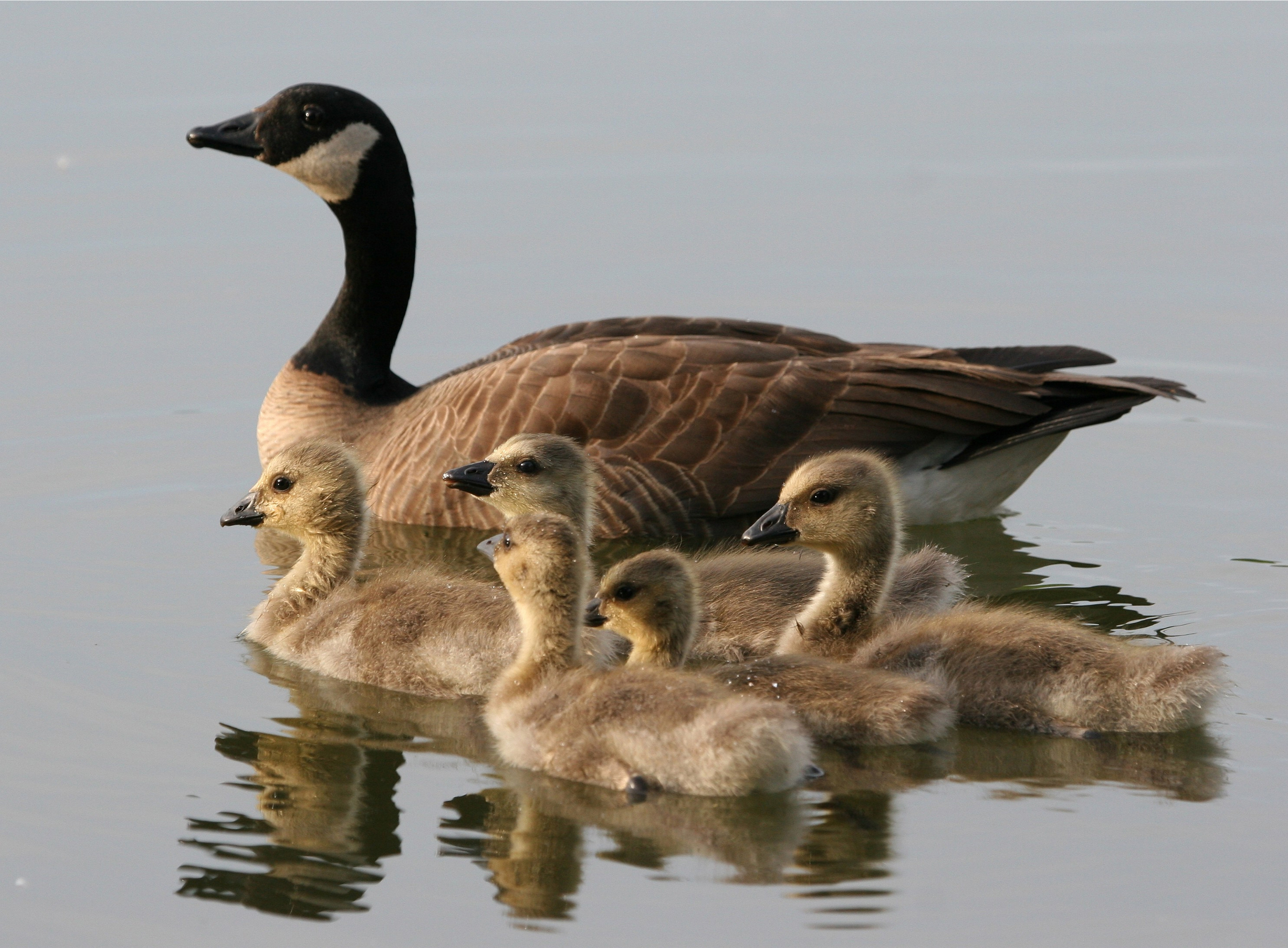
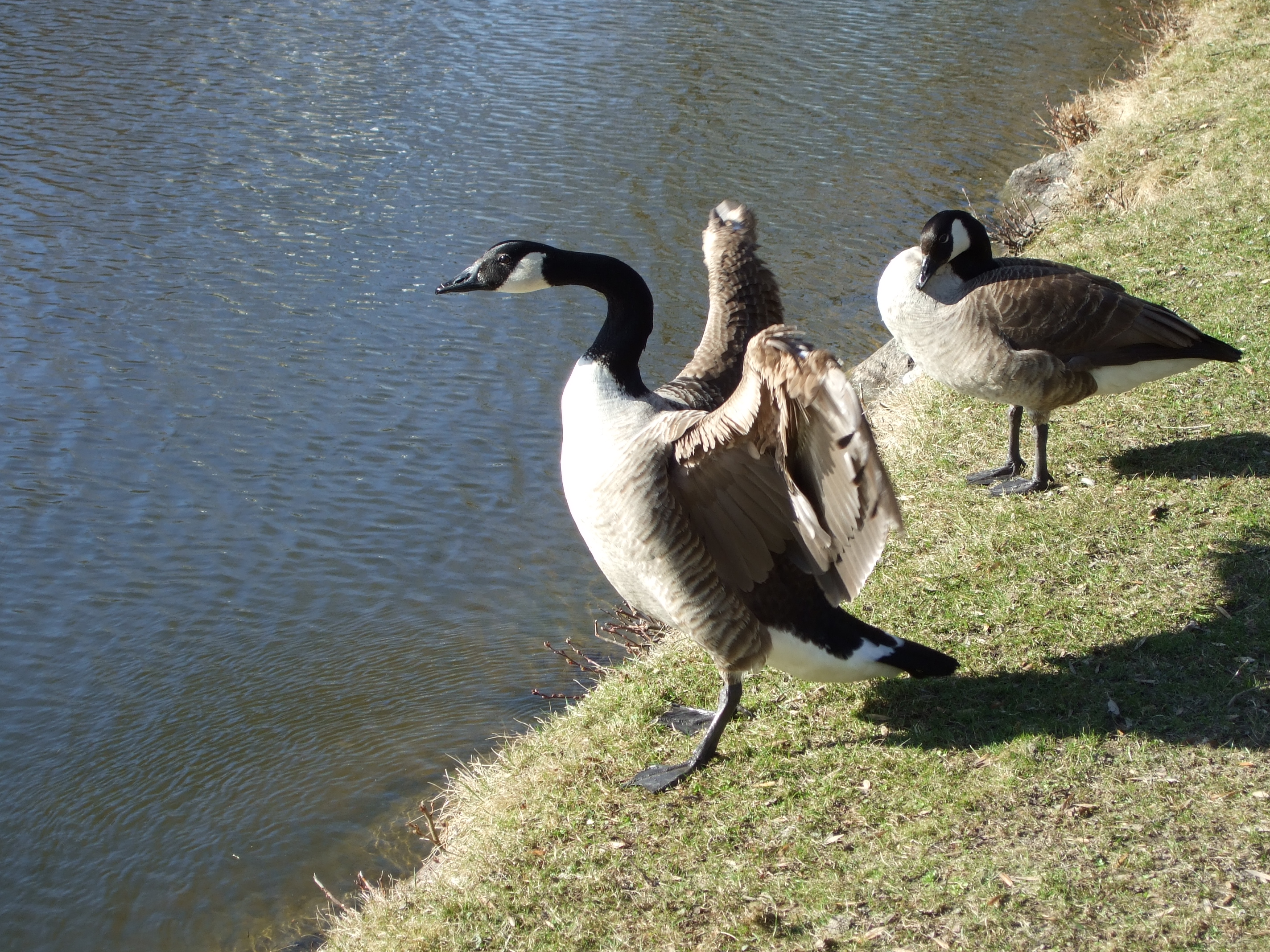
Washington State : Wildlife Officials at Sammamish State Park Round UP and Kill 90 Geese Over Concerns About Poop.

There  are  better  ways  of  dealing  with this,  however  the  easiest  is the  option  to   kill  these  creatures?  Why  not take the  initiative  and  collect  the  damn  poop  for   fertilizer.  That's  what they  do  with   chicken  poop,  don't they?  It can  easily  be  collected  as the  grass is  mowed.  They  just  need a capture  option  on the mower  and please  don't tell me   that  does  not  exist!   How  do  they remove garbage  from the  sand normally  to  ensure  the  lake is tidy?   People never  clean  up after  themselves  properly.  I  cannot  believe  they  do not  have measures  that  are  routinely  used to make  sure  the lake  stays  free of  debris. 

Letting  your  child  sit  and  eat  sand  off of  a  beach is not  exactly  sanitary  even  without  geese  being  present.  This is a  blatant  disregard  for  life, plain and  simple.  There  are  no  excuses that  would  adequately  justify  this action.

Concerns  for public  safety is  simply  an  excuse.  These animals  are  harmless and when  gassing them and  dumping  their   bodies in a  landfill is  easier  than  mowing  the  damn  grass  there  is  something  very  wrong! 

What the hell is  wrong  with people?

~Desert Rose~
~Desert Rose~
*************************************************************************

90 geese at Lake Sammamish State Park captured and killed


by ZAHID ARAB / KING 5 News
Bio | Email
Posted on August 3, 2013 at 5:06 PM
Updated yesterday at 9:23 PM

Concerns of goose poop and harm to the environment at Lake Sammamish State Park prompted wildlife officials to capture and kill 90 geese.
“You’ve got to watch where you’re walking,” said Anthony Lammers, a park visitor.
Feces from the bird carry harmful bacteria like E.Coli and Salmonella.
Animal advocates are disgusted and are calling on state park leaders to come up with humane alternatives.
“They’re just trying to protect their babies and exist just like we are,” said Diane Weinstein, who lives near the park.
According to state officials, there were about 300 geese in the park this spring, creating a problem for the environment and the people.
“Getting bit in the butt is one thing but catch it in the front, you’re toast,” said Dutch Jackson, a park visitor.


Read More and Watch Video Here


******************************************************************
File:Branta canadensis1.jpg
Image Source  :   Wikimedia
Fish and Wildlife Service
File:Branta canadensis 5997.jpg
Image Source  :  Wikimedia
Photographs by Dori Category:Milwaukee, Wisconsin
File:Wildgans-schwarzer-kopf-fuerth.jpg
Image Source  :  Wikimedia
File:Standing canada goose.JPG
Image Source  :  Wikimedia
Author Magnus Ekhall
Enhanced by Zemanta

Saturday, August 3, 2013

Florida declares two butterfly species extinct as pollinator crisis worsens

 By: Alexander Holmgren

August 01, 2013

A skipper butterfly.  Photo by Muhammad Mahdi Karim and reproduced under the GNU Free Documentation License, Version 1.2.
A skipper butterfly. Photo by Muhammad Mahdi Karim and reproduced under the GNU Free Documentation License, Version 1.2.


Conservationist’s faced a crushing blow last month as two butterfly species native to Florida were declared extinct.

"Occasionally, these types of butterflies disappear for long periods of time but are rediscovered in another location," said Larry Williams, U.S. Fish and Wildlife state supervisor for ecological services. We think it’s apparent now these two species are extinct."

Neither species has been seen in any environment for at least nine years, the latter of the two not being seen since 2000. This calamity is only made worse by the fact that so much could have been done in order to save these creatures. The first species, the Zestos skipper butterfly (Epargyreus zestos oberon), had strong bodies with large black eyes and large wings that were adorned with spots that looked like eyes. While the Zestos skipper was visibly declining in its environment, the subspecies was denied access to the U.S.’s Endangered Species Act (ESA) because of the confusion between it and other skipper species in the Bahamas. In the end, what was thought to be a bountiful reserve in the Bahamas proved to be a completely different species. By the time the mistake was realized it proved too late.

The Rockland grass skipper butterfly (Hesperia meskei pinocayo), an amber golden insect with club like antenna and black eyes, was similarly thought to be making a comeback as the species that had not been seen since the 80’s was spotted back in 2000. But is now believed extinct.

The extinction of these animals "serves as a wake-up call that we really need to intensify our efforts to save other imperiled butterflies," according to Williams.

Both species vanished almost overnight as conservationists and scientists realized that the abundant populations of these species simply did not exist. 


Read More Here


Enhanced by Zemanta

Friday, August 2, 2013

How YouTube has put the world's only poisonous primates at risk

mongabay.com logo

Jeremy Hance
mongabay.com
July 25, 2013


It all started with a video: in 2009 a Russian man uploaded a video of himself tickling his exotic pet (a pygmy slow loris) from Vietnam onto the hugely popular site YouTube. Since then the video has been viewed over half a million times. But a new study in the open source journal in PLoS ONE, finds that such YouTube videos have helped fuel a cruel, illegal trade that is putting some of the world's least-known primates at risk of extinction. Lorises are small, shy, and nocturnal primates that inhabit the forests of tropical Asia, but the existence of all eight species is currently imperiled by a booming illegal pet trade that has been aided by videos of lorises being tickled, holding tiny umbrellas, or doing other seemingly cute (but wholly unnatural) things.

"In Indonesia alone, where six species of loris occur, a minimum of 15,000 lorises are trafficked each year; this does not count the numbers that die before making it to markets," lead author Anna Nekaris, with Oxford Brookes University and founder of the slow loris-organization Little Fireface Project, told mongabay.com. "In Indochina, no figures are available, but slow lorises have often been the most frequently encountered mammal in markets. In both regions, however, sellers report declines, saying they are 'finished' in the wild."
Given the popularity of YouTube videos showing illegal pet lorises, Nekaris and her team decided to analyze how people responded to the videos through viewer comments. Selecting the video of that pygmy slow loris (Nycticebus pygmaeus) being tickled in Russia, the researchers made their way through 12,000 comments. Worryingly, they found that around 25 percent of people expressed a desire for slow loris "pet." Many comments were along the lines of, "where can I get one?"

This baby Sumatran slow loris has little chance to survive. Only a few weeks old, it should live with its mother in the wild for 14 months, but instead is being sold into the pet trade, doomed to a diet of bananas and rice. Photo by: The Little Fireface Project.


But even beyond being illegal—slow lorises are protected in each of their range countries—the loris trade is problematic for a number of reasons. For one thing, slow lorises that end up in pet trade are not captive-bred but taken directly from the wild.
"Slow lorises are impossible to breed in captivity. The track record of some of the most renowned zoos shows that the number of slow lorises born in these facilities is way below what is needed for a self-sustaining population. Indeed several species have never been bred in captivity," Nekaris explains. "Without a shadow of a doubt the slow lorises we see in these YouTube videos are derived directly from the wild and not the result of some fictitious/magical captive breeding facilities."
In order to capture a slow loris baby for the trade, poachers must kill the mother and sometimes whole family groups. In other words, several slow lorises may die for one pet, and few pet owners realize their purchase is likely responsible for the death of their "pet's" mother. Further mortalities occur while the slow loris waits for a buyer.
"Slow lorises are the world's only venomous primates, so in hopes to keep them from biting, traders cruelly clip or rip out their teeth with pliers, wire cutters or nail clippers. This is done in the open street with no anesthesia, resulting usually in slow painful death due to infection," Nekaris says.

This wild baby Javan slow loris is just as it should be, with a full set of teeth, and still living with its family group in the wild. Photo by: Wawan Tarniwan.

This cruel operation also makes it possible to release confiscated lorises back into the forests, according to Nekaris, who adds that "the procedure is useless since their deadly venom can still be administered via their powerful jaws."
Keeping a loris is also incredibly difficult. Little is known about the animal's dietary needs even by scientists (for example the slow loris shown in the tickling video is clinically obese), and few of these pets live long.
However, the study also found a slight shift in opinions following the establishment of a Wikipedia page called 'Conservation of Slow Lorises' in 2011 and the airing of a documentary on the BBC about the slow loris trade called the Jungle Gremlins of Java in 2012. After this, comments expressing a desire to own a pet slow loris dropped to about 10 percent on the site per month, and those with a conservation message rose. But the videos are still seen as reinforcing both the illegal trade and the idea of slow lorises as "cute pets," instead of wild and poisonous primates that hugely sensitive to bright lights and human handling.
Today, all of the world's slow lorises are listed as either Vulnerable or Endangered by the IUCN Red List, and the Javan slow lorises is considered among the world's top 25 most imperiled primates. Lorises are also threatened by deforestation and the traditional medicine trade, but play hugely important roles in their ecosystems by pollinating plants and eating insect pests.
Nekaris told mongabay.com that one of the big problems for slow lorises and other animals exploited by sites like YouTube is that these social sites don't allow users to flag animal media as "illegal."

This Javan slow loris is already severely dehydrated, terrified, and shows injured hands and horrific fur condition. It is unlikely to make it to any YouTube video. Photo by: Wawan Tarniwan.
"Currently, no Web 2.0 site (e.g. Facebook, YouTube) allows viewers to report that animal material is illegal. Animal cruelty is available on YouTube, but is vastly different from illegal animal activity that threatens an entire group of species. If this flagging option were available, YouTube could then either embed flagged videos with warnings about illegal pet trade, poaching, medicinal, ivory or fur trade (for example), or ideally remove the videos altogether, as they would videos portraying illegal arms, pornography or drug use," Nekaris says.


Read More Here


Enhanced by Zemanta

Thursday, August 1, 2013

MSNBC host says newborn infants don't count as 'alive' unless parents decide they do; infanticide is the new abortion

abortion
Monday, July 29, 2013
by Mike Adams, the Health Ranger
Editor of NaturalNews.com
(NaturalNews) Today Natural News denounces Melissa Harris-Perry, the latest talking head "death worshipper" to publicly imply that she supports the murder of living, breathing newborn children. According to Harris-Perry, life begins when the parents feel like life begins. And together with some twisted new "ethics" arguments from the radical left, this can include months or years after a child is born.
That's why I need to premise this article with a disclaimer: This article is not about abortion. It's about the murder of children after they are born. Because once a child is born alive, terminating that life is no longer a "choice" … it's murder by every legal and moral standard. Because while abortion friends and foes can argue about when life begins in the womb, no one disagrees that a child born alive is, well, ALIVE… do they?
Indeed, they do. MSNBC talking head Melissa Harris-Perry insists that life only begins when the parents have a "feeling" that it begins. "When does life begin? I submit the answer depends an awful lot on the feeling of the parents. A powerful feeling -- but not science," Harris-Perry said to nationwide astonishment on her July 21 MSNBC show.
And in one stroke, she simultaneously condones the murder of newborn infants (i.e. "post-birth abortion") while attacking the science of biology which unambiguously states that a living, breathing infant with a heartbeat and brain function is alive, not dead.
But don't tell that to the radical abortion whackos. Far beyond arguing for the "right" to abort a baby in the first or second trimester, many abortion advocates who run in the same circles as Melissa Harris-Perry are now publicly arguing that it is okay for parents to kill their children up to age three. This is now being promoted as a "post-birth abortion."
It was also called a "fourth trimester abortion" by a clever pollster who recently took to the streets of George Mason University to find out if summertime college students would sign a petition legalizing fourth-trimester abortions. Nearly all who were asked to sign the petition did so! One of the college students even asked whether the procedure would "cause harm to the child."
"Well the child wouldn't be there anymore," responded the pollster, after which the college student then proceeded to sign the petition.
Watch this video yourself at:
And yes, this is how incredibly stupid many of today's college students really are. Then again, I remember a guy back in college who walked in on a group of us watching a football game and asked, "How many quarters are there in a football game?" His lack of mathematical prowess would have made him a ripe target for the "fourth trimester abortion" gimmick, I'll bet.

Murdering live babies under the label of "abortion"

Let's be clear about where all this is headed. This is not about arguing over a woman's right to have a first- or second-trimester abortion. This isn't even a debate about a third-trimester abortion, the kind of abortion that was recently outlawed in Texas, much to the despair of late-term abortion advocates across the country, some of whom actually chanted "Hail Satan" in unison at the Austin abortion rally.
This is really about the zealous desire of the radical left to legalize the "aborting" of babies after they are born alive so that parents can have the legal right to kill living babies they suddenly decide they don't want to raise.
Getting back to Harris-Perry, according to her radical brand of death culture ideology, a parent can "decide" that a baby born alive isn't really alive yet. That parent can wait to see whether the baby is well-behaved, or cute, or has the right skin color, or whatever, before deciding whether to keep it or kill it. If such an ideology were fronted by someone like George Bush, it would be wildly derided as barbaric and anti-human, but because the idea of murdering newborn babies is being pushed by liberals, it is met with silence instead of outrage.
"When a pregnancy is wanted . . . It is easy to think of the bump as a baby," says Melissa Harris-Perry, implying that when a pregnancy is not wanted, that bump isn't a baby at all. Somehow it's just a mass of dead tissue that you can dispose of at will. The fact that the "bump" results in a live childbirth is never admitted by people like Harris-Perry. The baby isn't "alive" until you decide it is!


 Read More Here


Enhanced by Zemanta