Showing posts with label Nutrition. Show all posts

Saturday, December 12, 2015

DuPont and Dow Chemical—announce plans to merge into a $130 billion giant, taking us one giant step closer to a total monopoly on our food suppy


Home
Published on
by

The DuPont and Dow Chemical Merger: Bad Deal for People and the Planet

Groups are calling on the Department of Justice to reject the deal to protect food supply
 
 
"Just a handful of large chemical companies including Dow and DuPont already control most of the seed supply used to grow crops like corn and soybeans, as well as the herbicides that genetically engineered seeds are designed to be grown with," said Wenonah Hauter of Food & Water Watch. (Photo: Desmanthus4food/Wikimedia/cc)


"Just a handful of large chemical companies including Dow and DuPont already control most of the seed supply used to grow crops like corn and soybeans, as well as the herbicides that genetically engineered seeds are designed to be grown with," said Wenonah Hauter of Food & Water Watch. (Photo: Desmanthus4food/Wikimedia/cc)


Watchdog groups are sounding the alarm after two of the oldest and largest corporations in the United States—DuPont and Dow Chemical—announced Friday plans to merge into a $130 billion giant, thereby establishing the world's biggest seed and pesticide conglomerate.

The new behemoth, named DowDuPont, would then be split into "three independent, publicly traded companies through tax-free spin-offs," according to a joint corporate statement marking one of the the largest deals of 2015.

These companies would focus on agriculture, material science, and "technology and innovation-driven Specialty Products company," the statement continues. Together, they would form the second-largest chemical company world-wide.

The merger, if it goes through, is expected to slash numerous jobs.

And it would expand the influence of two Big Ag players, with the combined venture retaining control over "17 percent of global pesticide sales and about 40 percent of America’s corn-seed and soybean markets," according to the calculations of Washington Post analysts.

Rights groups warn that this large share would be very bad for people and the planet—and called on the Department of Justice to block the merger.


"The Department of Justice needs to block this merger to prevent the further corporate control of the basic building blocks of the food supply."

—Wenonah Hauter, Food & Water Watch


"Just a handful of large chemical companies including Dow and DuPont already control most of the seed supply used to grow crops like corn and soybeans, as well as the herbicides that genetically engineered seeds are designed to be grown with," said Wenonah Hauter, executive director of advocacy organization Food & Water Watch, in a statement released Friday.

"Any merger that consolidates this market into fewer hands will give farmers fewer choices and put them at even more economic disadvantage," Hauter continued. "And it will make it harder for agriculture to get off the GMO-chemical treadmill that just keeps increasing in speed. The Department of Justice needs to block this merger to prevent the further corporate control of the basic building blocks of the food supply."

According to the New York Times, "Despite the eventual breakup, the deal would undergo rigorous antitrust scrutiny for all three companies, particularly the agricultural chemicals company."
Diana Moss, president of the American Antitrust Institute, confirmed Friday that "any merger on the agricultural inputs side of DuPont and Dow will get antitrust scrutiny."

Nonetheless, watchdog groups warn that the merger announcement is a bad sign, in an industry that has already undergone dramatic consolidation.

"Some of the markets for biotech and seeds are highly concentrated, which has been driven by Monsanto having made so many acquisitions in the past. If you put a new merger in the this mix, it's going to raise concerns about leaving only two or maybe three firms," Moss explained. "Farmers could be squeezed even more and consumers could pay higher prices."

Robert Reich, University of California at Berkeley professor and former Secretary of Labor, took to social media to warn that the merger would result in greater political power for the corporation, as well as "higher prices for you for food and a variety of other products."

"Crop prices continue to drop, so the only way these giant companies can increase earnings is by increasing their market power to raise prices (Monsanto is also on the prowl to buy a Big Ag or chemical company)," Reich continued. "That means more of your paycheck will be going to them, directly or indirectly."

......................................................................................................

Wednesday, December 9, 2015

Home-delivered meals reduce feelings of loneliness among seniors


Published: Tuesday 8 December 2015 at 3am PST


Homebound seniors who have home-delivered meals report significantly less loneliness than those who do not, according to a study published in Journals of Gerontology, Series B.
 
 
Senior man receives home delivered meal from female visitor
 
There was a significant reduction in self-reported feelings of loneliness among homebound seniors who had home-delivered meals, compared with those who did not.
Image credit: Michael Cohea/Brown University
 
The pressure to cut costs brings with it the possibility of overlooking the less tangible benefits when seeking alternative models in the provision of a public service.

Nutrition service providers are no exception, and the new study - conducted as a randomized, controlled trial - shows that home-delivered meals do more than nourish physical well-being; they also have a positive emotional effect in the lives of older people who are stuck at home.

It appears that the regular knock on the door, with the opportunity to exchange some friendly words with the person delivering the meal, goes a long way to reducing feelings of loneliness in older people in need.

Lead author Kali Thomas, assistant professor (research) of health services, policy and practice at Brown University School of Public Health in Providence, RI, says:
"This continues to build the body of evidence that home-delivered meals provide more than nutrition and food security."

Prof. Thomas, a former volunteer for Meals on Wheels, believes the study is one of only a few that has rigorously examined the long-presumed psychological benefits of home-delivered meal service. It is certainly the first randomized, controlled trial to measure the effect on loneliness, she notes.

Many participants socially isolated

The trial participants were 626 older adults from eight American cities who were on waiting lists to receive Meals on Wheels. They were randomly assigned to three groups.

In one group, the participants received a daily fresh meal, in another they received a weekly delivery of frozen meals, and in the third group they remained on the waiting list - this was the control group.
The trial ran for 15 weeks. All participants were interviewed at the start and end of the period.


Read More Here

Thursday, November 5, 2015

SCIENCE WARNING: Genetically modified soybeans cause stunted growth of animal offspring


NaturalNews's profile photo
NaturalNews


soy

(NaturalNews) Pregnant goats fed a diet of genetically modified (GM) soybeans produced small, slow-growing offspring compared with goats fed a diet of non-GM soybeans, according to a study conducted by Italian researchers and published in the journal Small Ruminant Research.

The soybeans used in the study were "Roundup Ready," engineered for resistance to Monsanto's global bestselling herbicide Roundup (glyphosate). This is the GM soybean variety most widely grown around the world.

Further analysis revealed that the milk produced by the goats fed GM soy was less nutritious and contained lower levels of a key growth-promoting class of antibodies.

Milk from GMO-fed goats is deficient

Sixty days before kidding, the researchers assigned pregnant Cilentana goats to be fed a diet containing either Monsanto's Roundup Ready soybeans at one of two different concentrations or the same concentrations of non-GM soybeans. After birth, the kids were fed only their mothers' milk for 60 more days. The growth of the kids was assessed at 30 and 60 days after birth.

The researchers found that kids of mothers fed GM soy were an average of 20 percent shorter and weighed 20 percent less than kids from the control groups.

Analysis of the mothers' colostrum (the type of milk produced for the first period following birth) revealed surprising findings. The milk from the mothers fed GM soy was significantly lower in quality, with lower levels of both fat and protein. For example, the milk from the control goats was 18 percent protein, while the milk from the GMO-fed goats was only 6 percent protein. These differences disappeared after several weeks. Perhaps even more significantly, the antibody composition was significantly different between the two groups. Milk from mothers fed GM soy had significantly lower levels of IgG antibodies, which promote growth and development of the immune system.

"This was a carefully conducted study," said Judy Carman of the Institute of Health and Environmental Research, Australia, who was not involved in the research.

"The differences in the composition of the colostrum between the mothers fed the GE soy and the non-GE soy were particularly striking. The colostrum from the GE-fed mothers contained only 2/3 of the fat, 1/3 of the protein and close to half of the IgG of the mothers fed the non-GM soy."

The researchers also detected transgenic (modified) DNA in the colostrum of 10 of the 16 GMO-fed goats, and in none of the colostrum of the control goats. This confirms prior findings that transgenic DNA from the diet can pass into the milk of ruminant mammals.

Another reason to avoid GM crops and Roundup

Because there was no significant difference in size between kids from the two groups at birth, the researchers believe that the differences observed in the mothers' milk likely account for the growth differences in the kids. There might also have been other changes in nutrient content of the milk that the researchers did not test for.

Significantly, prior studies have shown that IgG antibodies also play a role in nutrient absorption by promoting newborn gut development.

"It is already known that Roundup Ready soybeans have various defects including a Manganese deficiency," said Allison Wilson of The Bioscience Resource Project, who was not involved in the study. "Yet regulators and GMO developers have continuously dismissed credible reports of GMO crops causing apparent harm to animals, from many different research groups."

Roundup Ready crops are also known to be coated with higher average levels of glyphosate residue than non-GM crops. Glyphosate, in turn, has been linked to various toxic effects, including on the reproductive system and on growth and development, in addition to causing cancer.

Sources for this article include:

IndependentScienceNews.org

NaturalNews.com


About NaturalNews

The NaturalNews Network is a non-profit collection of public education websites covering topics that empower individuals to make positive changes in their health, environmental sensitivity, consumer choices and informed skepticism. The NaturalNews Network is owned and operated by Truth Publishing International, Ltd., a Taiwan corporation. It is not recognized as a 501(c)3 non-profit in the United States, but it operates without a profit incentive, and its key writer, Mike Adams, receives absolutely no payment for his time, articles or books other than reimbursement for items purchased in order to conduct product reviews.

The vast majority of our content is freely given away at no charge. We offer thousands of articles and dozens of downloadable reports and guides (like the Honest Food Guide) that are designed to educate and empower individuals, families and communities so that they may experience improved health, awareness and life fulfillment.
Learn More About Natural News Here

Sunday, October 4, 2015

Foods We Won’t Have If We Keep Letting Bees Die


About one-third of the world’s crops depend on the honeybees for pollination. The past decades honeybees have been dying at an alarming rate. Fewer bees will eventually lead to less availability of our favorite whole foods and it will also drive up the prices of many of the fruits and veggies we eat on a daily basis.

While some actions have been taken in the past, our bees are still dying and something needs to be done to make sure our most favorite foods don’t go into extinction.

What’s Causing Massive Bee Deaths?


About fifty years ago our world looked a whole lot different. Bees had an abundance of flowers to feast on and there were fewer pests and diseases threatening their food chain. These days however, nature has to make place for industrialization and our bees are having a hard time finding good pollen and nectar.

And if clearing their dinner tables from good quality food wasn’t bad enough already, farmers are extensively using herbicides and insecticides, which cause a phenome called Colony Collapse Disorder (CCD) where bees get disorientated and poisoned and can’t find their way back to the hive. Or when they manage to get back, they die from intoxication.

“We need good, clean food, and so do our pollinators. If bees do not have enough to eat, we won’t have enough to eat. Dying bees scream a message to us that they cannot survive in our current agricultural and urban environments,” states Marla Spivak, an American entomologist, and Distinguished McKnight University Professor at the University of Minnesota.

List of Foods We Will Have To Go without If The Bees Go


While we don’t need bees to pollinate all our food because they either self-pollinate or rely on the wind (like rice, wheat, and corn), many of our favorite foods will disappear from our kitchen tables.
Foods in the danger zone include:

  • Apples
  • Mangos
  • Kiwi Fruit
  • Peaches
  • Berries
  • Onions
  • Pears
  • Alfalfa
  • Cashews
  • Avocados
  • Passion Fruit
  • Beans
  • Cruciferous vegetables
  • Cacao/Coffee
  • Cotton
  • Lemons and limes
  • Carrots
  • Cucumber
  • Cantaloupe
  • Watermelon
  • Coconut
  • Beets
  • Turnips
  • Chili peppers, red peppers, bell peppers, green peppers
  • Papaya
  • Eggplant
  • Vanilla
  • Tomatoes
  • Grapes
  • Many seeds and nuts

A substantial drop in population, or complete extinction, of honeybees will make these food scares or even non-existent. So to keep our body healthy and our kitchen table interesting we have to take action before it is too late.

What You can Do


  • Plant bee friendly plants in your garden or green community space.
  • Limit the use of pesticides or use organic alternatives.
  • Buy local, organically grown produce and honey to support the beekeepers and farmers in your area.
  • Donate to non-profit organizations, like Pollinator Partnership, to help protect, grow, and strengthen bee populations.


Sources: CNN,  NCBI, and onEarth.
Don’t forget to download my FREE Book “Amy’s Home Kitchen”, packed with my family’s favorite healthy, clean and delicious recipes. Or connect with me on Facebook or Google+
If you are interested in detoxing, clean eating, losing weight, and changing your lifestyle without feeling hungry and counting calories, click here

************************************************************

About NaturalNews

The NaturalNews Network is a non-profit collection of public education websites covering topics that empower individuals to make positive changes in their health, environmental sensitivity, consumer choices and informed skepticism. The NaturalNews Network is owned and operated by Truth Publishing International, Ltd., a Taiwan corporation. It is not recognized as a 501(c)3 non-profit in the United States, but it operates without a profit incentive, and its key writer, Mike Adams, receives absolutely no payment for his time, articles or books other than reimbursement for items purchased in order to conduct product reviews.

The vast majority of our content is freely given away at no charge. We offer thousands of articles and dozens of downloadable reports and guides (like the Honest Food Guide) that are designed to educate and empower individuals, families and communities so that they may experience improved health, awareness and life fulfillment.
Learn More About Natural News Here

Thursday, February 27, 2014

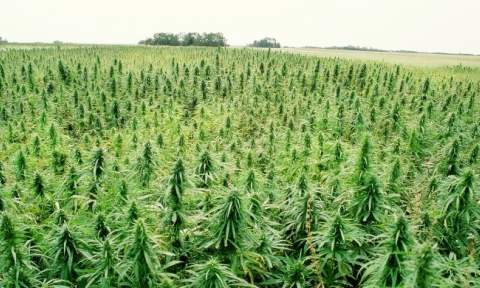
Hmmmm Factor : So why has the US government finally given farmers the right to legally grow industrial hemp? Could it be because hemp plants ‘eat’ radiation?


Did the Government Give Industrial Hemp a Pass to Clean Up Radiation in the States?

Christina Sarich

NationofChange / News Analysis

Published: Friday 14 February 2014

Hemp has numerous uses and could replace many crops that require heavy irrigation and pesticides, but the most interesting fact about hemp is that it “eats” radiation.

Article image
Activists have been shouting they want an end to GMO foods for more than a decade now, and Cannabis Sattiva L. supporters have been at it for even longer, so why has the US government finally given farmers the right to legally grow industrial hemp, the non-hallucinatory, sister plant of medical marijuana?
It is safe to say that industrialized hemp should have been legalized years ago. With THC levels so low, you would have to smoke more of it than Snoop Dogg to get ‘high’ – and that’s a lot of Cannabis, it is ridiculous that it was classified as a drug at all. It has numerous uses and could replace many crops that require heavy irrigation and pesticides, like cotton, for example. Here’s the most interesting fact though – hemp plants ‘eat’ radiation.
When the Chernobyl Nuclear Plant Reactor 4 accident caused severe radioactive contamination in 1986, families within a 30-kilometer area of the site had to be evacuated. Radioactive contamination was later found at 100 kilometers from the accident site, and Fukushima radiation levels are still to be determined, with the Japanese government planning on dumping their overflowing radiated water tanks into the Pacific as we speak.

Read More Here
Enhanced by Zemanta

Tuesday, September 3, 2013

Hunger in the U.S. : Families in Crisis

Many people think of hunger as an affliction that only affects underdeveloped countries or is typically the result of environmentally-induced famine. However, for one in ten Americans, hunger is an everyday reality.
Right now, over 50 million Americans -- including nearly 17 million children -- are struggling with hunger. We all know and are in contact with people affected by hunger, even though we might not be aware of it.
Poverty is forcing millions of Americans into a hunger crisis. Their hunger emergency is defined by food insecurity, which is the lack of access to sufficient, safe and nutritious food to meet their dietary needs for an active and healthy life.2 Families find themselves buying cheaper and less nutritious food, or cutting entire meals out of their diet, just to make ends meet. Increasing over time, this pattern leads to chronic malnutrition, affecting children and families in profoundly destructive ways.
Hunger plays a pivotal role in perpetuating the cycle of poverty in the U.S., weakening families and systemically impairing the country's collective ability to reach its full potential. Hungry children are not able to play, engage, and learn like other children, and are therefore less likely to become productive adults. Compromised health can lead to both short- and long-term problems; children and the elderly are particularly vulnerable.
Both the commonplace demands of daily life and unexpected, dramatic events can easily push families below the poverty line. "Families are often forced to make the tradeoff between food and other expenses" explains Penn State University economic geographer Amy Glasmeier in her book, An Atlas of Poverty in America. "Healthcare is a particular problem. In poor, rural communities families often have no choice but to use the emergency room for routine health care. This is very expensive. Car repairs are another significant and unexpected expense. If the family car needs repair and it is the end of the month, when cash reserves are low, a family will have no choice but to reduce food intake to get the car back on the road in order to go to work."4

The Hidden Poor

According to FeedingAmerica.org, food insecurity affects many segments of the American population, and exists in every county in the U.S., from a low of 5% in Steele Country, ND to a high of 37% in Holmes County, MS.

Children

The USDA estimates that 16.7 million children are living in food-insecure households. In 2011, households that had higher rates of food insecurity than the national average included households with children (20.6%), especially households with children headed by single women (36.8%) or single men (24.9%), Black, non-Hispanic households (25.1%) and Hispanic households (26.2%).

Families

Families: A frightening 14.7% of U.S. households experienced food insecurity during 2011. 50.1 million people lived in food-insecure households, including children, working adults, and seniors.

Seniors

8% of seniors (one million households) were food insecure in 2011. A study that examined the health and nutritional status of seniors found that food-insecure seniors had significantly lower intakes of vital nutrients in their diets when compared to their food-secure counterparts. In addition, food-insecure seniors were more likely to report fair/poor health status and had higher nutritional risk.6


Read More Here


The Hunger Site
Enhanced by Zemanta

Monday, July 8, 2013

Human breast milk has become a new luxury for China's rich, with some firms offering wet nurse services, a report said, provoking outrage and disgust among web users .


                                   Image Source


Energy News


 Adult breast feeding report incenses China web users


Beijing (AFP) July 04, 2013 -

Xinxinyu, a domestic staff agency in the booming city of Shenzhen, which borders Hong Kong, provided wet nurses for newborns, the sick and other adults who pay high prices for the milk's fine nutrition, the Southern Metropolis Daily said.
"Adult (clients) can drink it directly through breastfeeding, or they can always drink it from a breast pump if they feel embarrassed," the report quoted company owner Lin Jun as saying.
Wet nurses serving adults are paid around 16,000 yuan ($2,600) a month -- more than four times the Chinese average -- and those who were "healthy and good looking" could earn even more, the report said.
Traditional beliefs in some parts of China hold that human breast milk has the best and most easily digestible nutrition for people who are ill.
But the report sparked heated debate in the media and on Chinese social media, with most users condemning the service as unethical.
"This adds to China's problem of treating women as consumer goods and the moral degradation of China's rich," said Cao Baoyin, a writer and regular commentator in various Chinese media, on his blog.
Xinxinyu has been ordered to suspend its operations and had its business licence revoked for multiple reasons including missing three years of annual checks, regulators in Shenzhen told AFP on Thursday, although the wet nurse service was not among the factors they cited.
Company officials could not be reached for comment by AFP.
There were nearly 140,000 postings on Sina Weibo, a Chinese equivalent of Twitter, on the topic by Thursday afternoon.
In an online poll, almost 90 percent of participants voted against the service, saying it "violated ethical values", a fraction over 10 percent deemed it a "normal business practice".
"People become perverts when they are too rich and tired of other forms of entertainment. This is disguised pornography," said a user with the online handle ricky_gao.
White Lotus, another weibo writer, said: "Please do not force motherhood to lose its grace and become ridiculous."
Other postings voiced cynical approval.
"It's just a business, nothing to blame it for," said A Xiao Shuai. "People are insensitive about ethics when there is money on the table."
Among the general population in China breastfeeding rates are low -- just 28 percent according to a 2012 UNICEF report -- due to time limits on maternity leave and aggressive marketing of formula.


Enhanced by Zemanta

Monday, June 17, 2013

The future of food: insects, GM rice and edible packaging are on the menu


******************************************************************************

As the global population rises and food prices do too, many scientists are looking for alternatives to traditional foodstuffs

Eating insects

Two billion people around the world, primarily in south-east Asia and Africa, eat insects – locusts, grasshoppers, spiders, wasps, ants – on a regular basis. Now, with food scarcity a growing threat, efforts are being made to normalise the concept of entomophagy, or the consumption of insects, for the other 5 billion. Last year, the UN's Food and Agriculture Organisation (FAO) published a list of more than 1,900 edible species of insects; the EU, meanwhile, offered its member states $3m to research the use of insects in cooking.
  1. FutureFest
  2. Shoreditch Town Hall, London EC1V 9LT
  3. Date: 28 September 2013
  4. Time: 9:30am
  5. Duration: 2 days
  6. Event website
  7. Add to your calendar
Why? Because insects, compared to livestock and fish, are a much more sustainable food source. They are available in abundance: for every human on Earth, there are 40 tonnes of insects. They have a higher food conversion rate than even our fastest-growing livestock (meaning they need to consume less to produce the same amount of meat) and they emit fewer greenhouse gases. As a fast-food option, which is how people treat them in countries such as Thailand, insects are greatly preferable to the water-guzzling, rainforest-destroying, methane-spewing beefburger. They are nutritious too: rich in protein, low in fat and cholesterol, high in calcium and iron.
That leaves the issue of palatability. Insects are generally viewed with disgust in the west, but attitudes are beginning to change. Thanks to adventurous restaurants – Copenhagen's Noma has served up ants and fermented grasshoppers – and pioneering organisations such as Ento in London, we are coming to terms with the notion that insects might actually be nice to eat.

Edible packaging

Our current food system is monumentally wasteful. Last January, a report found that almost half of the world's food is thrown away each year. In the UK alone, according to the government's waste adviser, Wrap, we generate 6.6m tonnes of food, drink and packaging waste per annum, at a cost of £5bn.
The fight against waste has thrown up some intriguing solutions.
For Harvard bioengineer David Edwards, the answer to the packaging problem is simple: just eat it. Last year, Edwards launched WikiCells, a company that makes edible packaging for fruit juices, coffee, ice cream and other products. Mimicking the design of a piece of fruit, the packaging consists of a soft skin "entirely comprised of natural food particles held together by nutritive ions" encased in a protective outer layer that is edible or at least biodegradable. Not only are the membranes more environmentally friendly than plastic, they are designed to taste good too.
Other packaging innovations promise to lengthen the shelf life of perishables, which would mean a reduction in food and drink waste. Pepceuticals, a company based in Leicester, is developing an antimicrobial film that it claims "should significantly prevent the deterioration of … fresh meat and save waste".


Read More Here