Showing posts with label Diseases. Show all posts

Wednesday, December 23, 2015

Ever wonder if there are any measurable health issues or problems from exposure to Smart Meters and the electromagnetic frequencies they emit? The answer is , YES!


Activist Post

Interrupt Your Regularly Scheduled Program


Red Blood Cells and Smart Meters


smart_meter_blood

By Catherine J. Frompovich

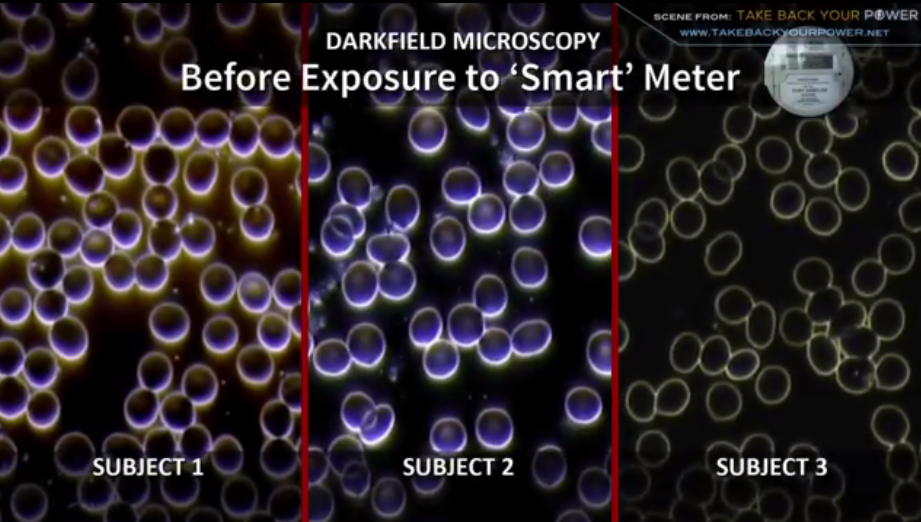
For those who wonder if there are any health issues or problems from exposure to Smart Meters and the electromagnetic frequencies they emit, here is a short video which shows three samples of blood examined using a Darkfield Microscope.

  https://www.youtube.com/watch?feature=player_detailpage&v=y4JDEspdx58#t=5

 
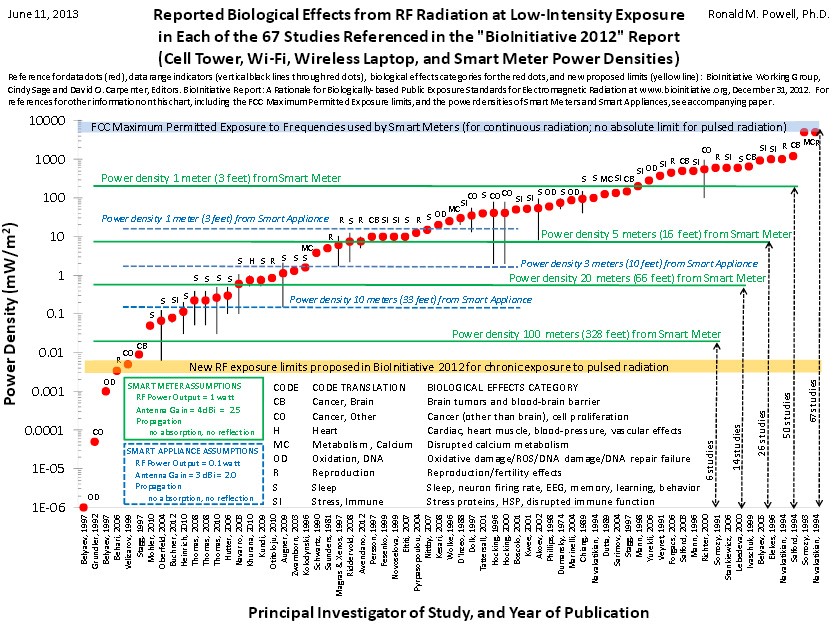
The video is self-explanatory, as the samples clearly show morphological responses or reactions. That kind of constant exposure with apparent human cellular morphological reactions—as will happen when a Smart Meter is placed on a dwelling—undoubtedly occurs, as EMFs/RFs are emitted 24/7/365. Consequently, it will be only a matter of time, depending upon each individual’s electromagnetic sensitivities threshold, before adverse health consequences materialize. Below is a chart created by EMF researcher Ronald M. Powell, PhD, which is self-explanatory? [3]

 
exposure chart


  The above graphic shows that 67 peer-reviewed, repeated studies show significant health issues (e.g. cancer, tumors, infertility) at levels far below the government safety standards (gray line). The yellow line is what the standards should be if public safety is considered. Source

 In another paper, “Electronicmagnetic Field Interactions With the Human Body: Observed Effects and Theories,” (NASA, April 1981) presented to the Goddard Space Flight Center, Greenbelt, Maryland 20771, on page 23, we find this:


Adverse, Benign, and Curious Effects The effects listed and/or discussed in this section relate to at least three of the five senses (touch, hearing, and sight) and nearly every system of the human body (including circulatory, digestive, nervous, and muscular). Many of them are temporary; however, some result in death and persistent disease. Some are better understood and more widely accepted than others. [1] [CJF emphasis added]


In 1981, NASA knew of numerous health problems, which are now classified as “Non-Thermal Health Effects,” which were cited on page 30 of that report:


  • Headaches
  • Eyestrain
  • Fatigue
  • Dizziness
  • Disturbed sleep at night
  • Sleepiness in daytime
  • Moodiness
  • Irritability
  • Unsociability
  • Hypochondriac reactions
  • Feelings of fear
  • Nervous tension
  • Mental depression
  • Memory impairment
  • Pulling sensation in the scalp and brow
  • Loss of hair
  • Pain in muscles and heart region
  • Breathing difficulties
  • Increased perspiration of extremities
  • Difficulty with sex life


  Read More Here


   .............................................................................................  


How to Make A Smart Meter Cover

  ..........     ..........
Published on Mar 20, 2014
This video will show you how to make a Smart Meter Cover if you have concerns about the health and safety standards of Smart Meter radiation. This faraday cage will significantly decrease the power level signals coming out the front and back of the smart meter. Using a mesh screen (aluminum or galvanized steel) will allow enough of the signal to pass so that your utility company can still read the meter.
  ..........

Thursday, December 17, 2015

The court of appeals in Lyon, France, has found agribusiness giant Monsanto guilty of poisoning a man named Paul François.


Waking Times
 
 
By December 14, 2015
 

Court Finds Monsanto Responsible for Poisoning French Farmer


monsanto failAlex Pietrowski, Staff.
 
Waking Times
 

The court of appeals in Lyon, France, has found agribusiness giant Monsanto guilty of poisoning a man named Paul François. François is a farmer who claimed that he suffered a multitude of ailments, including headaches, memory loss, neurological problems and stammering, after he unintentionally inhaled Monsanto’s herbicide, Lasso.

François used Lasso for over 15 years, and in 2004 accidentally inhaled the product. After the incident, the farmer began getting severe headaches and experienced moments of mental absence and an inability to speak.

The chemical’s effects on François were so severe that he fainted, was hospitalized and fell into a coma. François was diagnosed with monochlorobenzene poisoning by his doctors, who found that the chemical permanently damaged his brain. Monochlorobenzene makes up 50% of the herbicide Lasso.
It is worth noting that the herbicide was prohibited in France and the rest of the European Union in 2007, and at the time of the incident, it was already banned in Canada (since 1985), Great Britain and Belgium (since 1992).

During the court hearing, Monsanto’s attorneys repeatedly claimed that the herbicide Lasso was not dangerous. François claimed that the company was aware of the toxic nature of the herbicide but failed to adequately warn about the potential health risks.


Read More Here

Monday, November 30, 2015

Neoliberal Ebola: The Ag Independent Science News | Food, Health and Agriculture Bioscience News July 27, 2015 by Rob Wallace The notion of a neoliberal Ebola is so beyond the pale as to send leading lights in ecology and health into apoplectic fits. Here’s one of bestseller David Quammen’s five tweets denouncing my hypothesis that neoliberalism drove the emergence of Ebola in West Africa. I’m an “addled guy” whose “loopy [blog] post” and “confused nonsense” Quammen hopes “doesn’t mislead credulous people.” Scientific American’s Steve Mirksy joked that he feared “the supply-side salmonella”. He would walk that back when I pointed out the large literature documenting the ways and means by which the economics of the egg sector is driving salmonella’s evolution. The facts of the Ebola outbreak similarly turn Quammen’s objection on its head. Guinea Forest Region in 2014 Guinea Forest Region in 2014 (Photo Credit Daniel Bausch) The virus appears to have been spilling over for years in West Africa. Epidemiologist Joseph Fair’s group found antibodies to multiple species of Ebola, including the very Zaire strain that set off the outbreak, in patients in Sierra Leone as far back as five years ago. Phylogenetic analyses meanwhile show the Zaire strain Bayesian-dated in West Africa as far back as a decade. An NIAID team showed the outbreak strain as possessing no molecular anomaly, with nucleotide substitution rates typical of Ebola outbreaks across Africa. That result begs an explanation for Ebola’s ecotypic shift from intermittent forest killer to a protopandemic infection infecting 27,000 and killing over 11,000 across the region, leaving bodies in the streets of capital cities Monrovia and Conakry. Explaining the rise of Ebola The answer, little explored in the scientific literature or the media, appears in the broader context in which Ebola emerged in West Africa. The truth of the whole, in this case connecting disease dynamics, land use and global economics, routinely suffers at the expense of the principle of expediency. Such contextualization often represents a threat to many of the underlying premises of power. In the face of such an objection, it was noted that the structural adjustment to which West Africa has been subjected the past decade included the kinds of divestment from public health infrastructure that permitted Ebola to incubate at the population level once it spilled over. The effects, however, extend even farther back in the causal chain. The shifts in land use in the Guinea Forest Region from where the Ebola epidemic spread were also connected to neoliberal efforts at opening the forest to global circuits of capital. Daniel Bausch and Lara Schwarz characterize the Forest Region, where the virus emerged, as a mosaic of small and isolated populations of a variety of ethnic groups that hold little political power and receive little social investment. The forest’s economy and ecology are also strained by thousands of refugees from civil wars in neighboring countries. The Region is subjected to the tandem trajectories of accelerating deterioration in public infrastructure and concerted efforts at private development dispossessing smallholdings and traditional foraging grounds for mining, clear-cut logging, and increasingly intensified agriculture. The Ebola hot zone as a whole comprises a part of the larger Guinea Savannah Zone the World Bank describes as “one of the largest underused agricultural land reserves in the world.” Africa hosts 60% of the world’s last farmland frontier. And the Bank sees the Savannah best developed by market commercialization, if not solely on the agribusiness model. As the Land Matrix Observatory documents, such prospects are in the process of being actualized. There, one can see the 90 deals by which U.S.-backed multinationals have procured hundreds of thousands of hectares for export crops, biofuels and mining around the world, including multiple deals in Sub-Saharan Africa. The Observatory’s online database shows similar land deals pursued by other world powers, including the UK, France, and China. Under the newly democratized Guinean government, the Nevada-based and British-backed Farm Land of Guinea Limited secured 99-year leases for two parcels totaling nearly 9000 hectares outside the villages of N’Dema and Konindou in Dabola Prefecture, where a secondary Ebola epicenter developed, and 98,000 hectares outside the village of Saraya in Kouroussa Prefecture. The Ministry of Agriculture has now tasked Farm Land Inc to survey and map an additional 1.5 million hectares for third-party development. While these as of yet undeveloped acquisitions are not directly tied to Ebola, they are markers of a complex, policy-driven phase change in agroecology that our group hypothesizes undergirds Ebola’s emergence. The role of palm oil in West Africa Our thesis orbits around palm oil, in particular. Palm is a vegetable oil of highly saturated fats derived from the red mesocarp of the African oil palm tree now grown around the world. The fruit’s kernel also produces its own oil. Refined and fractionated into a variety of byproducts, both oils are used in an array of food, cosmetic and cleaning products, as well as in some biodiesels. With the abandonment of trans fats, palm oil represents a growing market, with global exports totaling nearly 44 million metric tons in the 2014 growing season. Oil palm plantations, covering more than 17 million hectares worldwide, are tied to deforestation and expropriation of lands from indigenous groups. We see from this Food and Agriculture Organization map that while most of the production can be found in Asia, particularly in Indonesia, Malaysia and Thailand, most of the suitable land left for palm oil can be found in the Amazon and the Congo Basin, the two largest rainforests in the world. Palm oil represents a classic case of Lauderdale’s paradox. As environmental resources are destroyed what’s left becomes more valuable. A decaying resource base, then, is no due cause for agribusiness turning into good global citizens, as industry-funded advocates have argued. On the contrary, agribusiness seeks exclusive access to our now fiscally appreciating, if ecologically declining, landscapes. Food production didn’t start that way in West Africa, of course. Natural and semi-wild groves of different oil palm types have long served as a source of red palm oil in the Guinea Forest Region. Forest farmers have been raising palm oil in one or another form for hundreds of years. Fallow periods allowing soils to recover, however, were reduced over the 20th century from 20 years in the 1930s to 10 by the 1970s, and still further by the 2000s, with the added effect of increasing grove density. Concomitantly, semi-wild production has been increasingly replaced with intensive hybrids, and red oil replaced by, or mixed with, industrial and kernel oils. Other crops are grown too, of course. Regional shade agriculture includes coffee, cocoa and kola. Slash-and-burn rice, maize, hibiscus, and corms of the first year, followed by peanut and cassava of the second and a fallow period, are rotated through the agroforest. Lowland flooding supports rice. In essence, we see a move toward increased intensification without private capital but still classifiable as agroforestry. But even this kind of farming has since been transformed. The Guinean Oil Palm and Rubber Company (with the French acronym SOGUIPAH) began in 1987 as a parastatal cooperative in the Forest but since has grown to the point it is better characterized a state company. It is leading efforts that began in 2006 to develop plantations of intensive hybrid palm for commodity export. SOGUIPAH economized palm production for the market by forcibly expropriating farmland, which to this day continues to set off violent protest. International aid has accelerated industrialization. SOGUIPAH’s new mill, with four times the capacity of one it previously used, was financed by the European Investment Bank. The mill’s capacity ended the artisanal extraction that as late as 2010 provided local populations full employment. The subsequent increase in seasonal production has at one and the same time led to harvesting above the mill’s capacity and operation below capacity off-season, leading to a conflict between the company and some of its 2000 now partially proletarianized pickers, some of whom insist on processing a portion of their own yield to cover the resulting gaps in cash flow. Pickers who insist on processing their own oil during the rainy season now risk arrest. The new economic geography has also initiated a classic case of land expropriation and enclosure, turning a tradition of shared forest commons toward expectations whereby informal pickers working fallow land outside their family lineage obtain an owner’s permission before picking palm. Palm oil and Ebola What does all this have to do with Ebola? Fig. 1 Palm Oil and Ebola Fig. 1 Palm Oil and Ebola The figure at top left (of Fig. 1) shows an archipelago of oil palm plots in the Guéckédou area, the outbreak’s apparent ground zero. The characteristic landscape is a mosaic of villages surrounded by dense vegetation and interspersed by crop fields of oil palm (in red) and patches of open forest and regenerated young forest. The general pattern can be discerned at a finer scale as well, above, west of the town of Meliandou, where the index cases appeared. The landscape embodies a growing interface between humans and frugivore bats, a key Ebola reservoir, including hammer-headed bats, little collared fruit bats and Franquet’s epauletted fruit bats. Nur Juliani Shafie and colleagues document a variety of disturbance-associated fruit bats attracted to oil palm plantations. Bats migrate to oil palm for food and shelter from the heat while the plantations’ wide trails also permit easy movement between roosting and foraging sites. Bats aren’t stupid. As the forest disappears they shift their foraging behavior to what food and shelter are left. Bush meat hunting and butchery are one means by which subsequent spillover may take place. But to move away from the kinds of Western ooga booga epidemiology that wraps outbreaks in such ‘dirty’ cultural cloth, agricultural cultivation may be enough. Fruit bats in Bangladesh transmitted Nipah virus to human hosts by urinating on the date fruit humans cultivated. Almudena Marí Saéz and colleagues have since proposed the initial Ebola spillover occurred outside Meliandou when children, including the putative index case, caught and played with Angolan free-tailed bats in a local tree. The bats are an insectivore species also previously documented as an Ebola virus carrier. Whatever the specific reservoir source, shifts in agroeconomic context still appear a primary cause. Previous studies show the free-tailed bats also attracted to expanding cash crop production in West Africa, including of sugar cane, cotton, and macadamia. Indeed, every Ebola outbreak appears connected to capital-driven shifts in land use, including back to the first outbreak in Nzara, Sudan in 1976, where a British-financed factory spun and wove local cotton. When Sudan’s civil war ended in 1972, the area rapidly repopulated and much of the local rainforest—and bat ecology—was reclaimed for subsistence farming, with cotton returning as the area’s dominant cash crop. Are New York, London and Hong Kong as much to blame? Clearly such outbreaks aren’t merely about specific companies. We have started working with University of Washington’s Luke Bergmann to test whether the world’s circuits of capital as they relate to husbandry and land use are related to disease emergence. Bergmann and Holmberg’s maps, still in preparation, show the percent of land whose harvests are consumed abroad as agricultural goods or in manufactured goods and services for croplands, pastureland and forests. The maps show landscapes are globalized by circuits of capital. In this way, the source of a disease may be more than merely the country in which it may first appear and indeed may extend as far as the other side of the world. We need to identify who funded the development and deforestation to begin with. Such an epidemiology begs whether we might more accurately characterize such places as New York, London and Hong Kong, key sources of capital, as disease ‘hot spots’ in their own right. Diseases are relational in their geographies, and not solely absolute, as the ecohealth cowboys chronicled by David Quammen claim. Similarly, such a new approach ruins the neat dichotomy between emergency responses and structural interventions. Some disease hounds who acknowledge global structural issues tend to still focus on the immediate logistics of any given outbreak. Emergency responses are needed, of course. But we need to acknowledge that the emergency arose from the structural. Indeed, such emergencies are used as a means by which to avoid talking about the bigger picture driving the emergence of new diseases. The forest may be its own cure There’s another false dichotomy to unpack—this one between the forest’s ecosystemic noise and deterministic effect. The environmental stochasticity at the center of forest ecology isn’t synonymous with random noise. Here a bit of math can help. A simple stochastic differential model of exponential pathogen population growth can include fractional white noise of an index 0 to 1 defined by a covariance relationship across time and space. An Ito expansion produces a classic result in population growth: When below a threshold, the noise exponent is small enough to permit a pathogen population to explode in size. When above the threshold, the noise is large enough to control an outbreak, frustrating efforts on the part of the pathogen to string together a bunch of susceptibles to infect. Never mind the technical details. The important point is that disease trajectories, even in the deepest forest, aren’t divorced from their anthropogenic context. That context can impact upon the forest’s environmental noise and its effects on disease. How exactly in Ebola’s case? It’s been long known that if you can lower an outbreak below an infection Allee threshold—say by a vaccine or sanitary practices—an outbreak, not finding enough susceptibles, can burn out on its own. But commoditizing the forest may have lowered the region’s ecosystemic threshold to such a point where no emergency intervention can drive the Ebola outbreak low enough to burn out on its own. The virus will continue to circulate, with the potential to explode again. In short, neoliberalism’s structural shifts aren’t just a background on which the emergency of Ebola takes place. The shifts are the emergency as much as the virus itself. In contrast to Nassim Taleb’s Black Swan—history as shit happens—we have here an example of stochasticity’s impact arising out of deterministic agroeconomic policy—a phenomenon I’ve taken to calling the Red Swan. Here, sudden switches in land use may explain Ebola’s emergence. Deforestation and intensive agriculture strip out traditional agroforestry’s stochastic friction that until this point had kept the virus from stringing together enough transmission. Under certain conditions, the forest may act as its own epidemiological protection. We risk the next deadly pandemic when we destroy that capacity. Rob Wallace is an evolutionary biologist and public health phylogeographer currently visiting the Institute of Global Studies at the University of Minnesota. He also blogs at Farming Pathogens. roeconomic Origins of the Ebola Outbreak


July 27, 2015
 
by Rob Wallace

The notion of a neoliberal Ebola is so beyond the pale as to send leading lights in ecology and health into apoplectic fits.

Here’s one of bestseller David Quammen’s five tweets denouncing my hypothesis that neoliberalism drove the emergence of Ebola in West Africa. I’m an “addled guy” whose “loopy [blog] post” and “confused nonsense” Quammen hopes “doesn’t mislead credulous people.”


Scientific American’s Steve Mirksy joked that he feared “the supply-side salmonella”. He would walk that back when I pointed out the large literature documenting the ways and means by which the economics of the egg sector is driving salmonella’s evolution.

The facts of the Ebola outbreak similarly turn Quammen’s objection on its head.

Guinea Forest Region in 2014
Guinea Forest Region in 2014 (Photo Credit Daniel Bausch)


The virus appears to have been spilling over for years in West Africa. Epidemiologist Joseph Fair’s group found antibodies to multiple species of Ebola, including the very Zaire strain that set off the outbreak, in patients in Sierra Leone as far back as five years ago. Phylogenetic analyses meanwhile show the Zaire strain Bayesian-dated in West Africa as far back as a decade.

An NIAID team showed the outbreak strain as possessing no molecular anomaly, with nucleotide substitution rates typical of Ebola outbreaks across Africa.

That result begs an explanation for Ebola’s ecotypic shift from intermittent forest killer to a protopandemic infection infecting 27,000 and killing over 11,000 across the region, leaving bodies in the streets of capital cities Monrovia and Conakry.

Explaining the rise of Ebola


The answer, little explored in the scientific literature or the media, appears in the broader context in which Ebola emerged in West Africa.

The truth of the whole, in this case connecting disease dynamics, land use and global economics, routinely suffers at the expense of the principle of expediency. Such contextualization often represents a threat to many of the underlying premises of power.

In the face of such an objection, it was noted that the structural adjustment to which West Africa has been subjected the past decade included the kinds of divestment from public health infrastructure that permitted Ebola to incubate at the population level once it spilled over.

The effects, however, extend even farther back in the causal chain. The shifts in land use in the Guinea Forest Region from where the Ebola epidemic spread were also connected to neoliberal efforts at opening the forest to global circuits of capital.

Daniel Bausch and Lara Schwarz characterize the Forest Region, where the virus emerged, as a mosaic of small and isolated populations of a variety of ethnic groups that hold little political power and receive little social investment. The forest’s economy and ecology are also strained by thousands of refugees from civil wars in neighboring countries.

The Region is subjected to the tandem trajectories of accelerating deterioration in public infrastructure and concerted efforts at private development dispossessing smallholdings and traditional foraging grounds for mining, clear-cut logging, and increasingly intensified agriculture.
The Ebola hot zone as a whole comprises a part of the larger Guinea Savannah Zone the World Bank describes as “one of the largest underused agricultural land reserves in the world.” Africa hosts 60% of the world’s last farmland frontier. And the Bank sees the Savannah best developed by market commercialization, if not solely on the agribusiness model.

As the Land Matrix Observatory documents, such prospects are in the process of being actualized. There, one can see the 90 deals by which U.S.-backed multinationals have procured hundreds of thousands of hectares for export crops, biofuels and mining around the world, including multiple deals in Sub-Saharan Africa. The Observatory’s online database shows similar land deals pursued by other world powers, including the UK, France, and China.

Under the newly democratized Guinean government, the Nevada-based and British-backed Farm Land of Guinea Limited secured 99-year leases for two parcels totaling nearly 9000 hectares outside the villages of N’Dema and Konindou in Dabola Prefecture, where a secondary Ebola epicenter developed, and 98,000 hectares outside the village of Saraya in Kouroussa Prefecture. The Ministry of Agriculture has now tasked Farm Land Inc to survey and map an additional 1.5 million hectares for third-party development.

While these as of yet undeveloped acquisitions are not directly tied to Ebola, they are markers of a complex, policy-driven phase change in agroecology that our group hypothesizes undergirds Ebola’s emergence.

The role of palm oil in West Africa


Our thesis orbits around palm oil, in particular.

Palm is a vegetable oil of highly saturated fats derived from the red mesocarp of the African oil palm tree now grown around the world. The fruit’s kernel also produces its own oil. Refined and fractionated into a variety of byproducts, both oils are used in an array of food, cosmetic and cleaning products, as well as in some biodiesels. With the abandonment of trans fats, palm oil represents a growing market, with global exports totaling nearly 44 million metric tons in the 2014 growing season.

Oil palm plantations, covering more than 17 million hectares worldwide, are tied to deforestation and expropriation of lands from indigenous groups. We see from this Food and Agriculture Organization map that while most of the production can be found in Asia, particularly in Indonesia, Malaysia and Thailand, most of the suitable land left for palm oil can be found in the Amazon and the Congo Basin, the two largest rainforests in the world.

Palm oil represents a classic case of Lauderdale’s paradox. As environmental resources are destroyed what’s left becomes more valuable. A decaying resource base, then, is no due cause for agribusiness turning into good global citizens, as industry-funded advocates have argued. On the contrary, agribusiness seeks exclusive access to our now fiscally appreciating, if ecologically declining, landscapes.

Food production didn’t start that way in West Africa, of course.

Natural and semi-wild groves of different oil palm types have long served as a source of red palm oil in the Guinea Forest Region. Forest farmers have been raising palm oil in one or another form for hundreds of years. Fallow periods allowing soils to recover, however, were reduced over the 20th century from 20 years in the 1930s to 10 by the 1970s, and still further by the 2000s, with the added effect of increasing grove density. Concomitantly, semi-wild production has been increasingly replaced with intensive hybrids, and red oil replaced by, or mixed with, industrial and kernel oils.
Other crops are grown too, of course. Regional shade agriculture includes coffee, cocoa and kola. Slash-and-burn rice, maize, hibiscus, and corms of the first year, followed by peanut and cassava of the second and a fallow period, are rotated through the agroforest. Lowland flooding supports rice. In essence, we see a move toward increased intensification without private capital but still classifiable as agroforestry.

But even this kind of farming has since been transformed.

The Guinean Oil Palm and Rubber Company (with the French acronym SOGUIPAH) began in 1987 as a parastatal cooperative in the Forest but since has grown to the point it is better characterized a state company. It is leading efforts that began in 2006 to develop plantations of intensive hybrid palm for commodity export. SOGUIPAH economized palm production for the market by forcibly expropriating farmland, which to this day continues to set off violent protest.

International aid has accelerated industrialization. SOGUIPAH’s new mill, with four times the capacity of one it previously used, was financed by the European Investment Bank.

The mill’s capacity ended the artisanal extraction that as late as 2010 provided local populations full employment. The subsequent increase in seasonal production has at one and the same time led to harvesting above the mill’s capacity and operation below capacity off-season, leading to a conflict between the company and some of its 2000 now partially proletarianized pickers, some of whom insist on processing a portion of their own yield to cover the resulting gaps in cash flow. Pickers who insist on processing their own oil during the rainy season now risk arrest.

The new economic geography has also initiated a classic case of land expropriation and enclosure, turning a tradition of shared forest commons toward expectations whereby informal pickers working fallow land outside their family lineage obtain an owner’s permission before picking palm.

Palm oil and Ebola

What does all this have to do with Ebola?
Fig. 1 Palm Oil and Ebola

Fig. 1 Palm Oil and Ebola
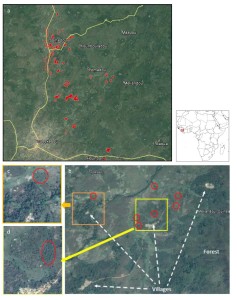
The figure at top left (of Fig. 1) shows an archipelago of oil palm plots in the Guéckédou area, the outbreak’s apparent ground zero. The characteristic landscape is a mosaic of villages surrounded by dense vegetation and interspersed by crop fields of oil palm (in red) and patches of open forest and regenerated young forest.

The general pattern can be discerned at a finer scale as well, above, west of the town of Meliandou, where the index cases appeared.

The landscape embodies a growing interface between humans and frugivore bats, a key Ebola reservoir, including hammer-headed bats, little collared fruit bats and Franquet’s epauletted fruit bats.
Nur Juliani Shafie and colleagues document a variety of disturbance-associated fruit bats attracted to oil palm plantations. Bats migrate to oil palm for food and shelter from the heat while the plantations’ wide trails also permit easy movement between roosting and foraging sites.

Bats aren’t stupid. As the forest disappears they shift their foraging behavior to what food and shelter are left.

Bush meat hunting and butchery are one means by which subsequent spillover may take place. But to move away from the kinds of Western ooga booga epidemiology that wraps outbreaks in such ‘dirty’ cultural cloth, agricultural cultivation may be enough. Fruit bats in Bangladesh transmitted Nipah virus to human hosts by urinating on the date fruit humans cultivated.

Almudena Marí Saéz and colleagues have since proposed the initial Ebola spillover occurred outside Meliandou when children, including the putative index case, caught and played with Angolan free-tailed bats in a local tree. The bats are an insectivore species also previously documented as an Ebola virus carrier.

Whatever the specific reservoir source, shifts in agroeconomic context still appear a primary cause. Previous studies show the free-tailed bats also attracted to expanding cash crop production in West Africa, including of sugar cane, cotton, and macadamia.

Indeed, every Ebola outbreak appears connected to capital-driven shifts in land use, including back to the first outbreak in Nzara, Sudan in 1976, where a British-financed factory spun and wove local cotton. When Sudan’s civil war ended in 1972, the area rapidly repopulated and much of the local rainforest—and bat ecology—was reclaimed for subsistence farming, with cotton returning as the area’s dominant cash crop.

Are New York, London and Hong Kong as much to blame?


Clearly such outbreaks aren’t merely about specific companies.

We have started working with University of Washington’s Luke Bergmann to test whether the world’s circuits of capital as they relate to husbandry and land use are related to disease emergence. Bergmann and Holmberg’s maps, still in preparation, show the percent of land whose harvests are consumed abroad as agricultural goods or in manufactured goods and services for croplands, pastureland and forests.

The maps show landscapes are globalized by circuits of capital. In this way, the source of a disease may be more than merely the country in which it may first appear and indeed may extend as far as the other side of the world. We need to identify who funded the development and deforestation to begin with.

Such an epidemiology begs whether we might more accurately characterize such places as New York, London and Hong Kong, key sources of capital, as disease ‘hot spots’ in their own right. Diseases are relational in their geographies, and not solely absolute, as the ecohealth cowboys chronicled by David Quammen claim.

Similarly, such a new approach ruins the neat dichotomy between emergency responses and structural interventions.

Some disease hounds who acknowledge global structural issues tend to still focus on the immediate logistics of any given outbreak. Emergency responses are needed, of course. But we need to acknowledge that the emergency arose from the structural. Indeed, such emergencies are used as a means by which to avoid talking about the bigger picture driving the emergence of new diseases.

The forest may be its own cure


There’s another false dichotomy to unpack—this one between the forest’s ecosystemic noise and deterministic effect.

The environmental stochasticity at the center of forest ecology isn’t synonymous with random noise.
Here a bit of math can help. A simple stochastic differential model of exponential pathogen population growth can include fractional white noise of an index 0 to 1 defined by a covariance relationship across time and space. An Ito expansion produces a classic result in population growth:
When below a threshold, the noise exponent is small enough to permit a pathogen population to explode in size. When above the threshold, the noise is large enough to control an outbreak, frustrating efforts on the part of the pathogen to string together a bunch of susceptibles to infect.
Never mind the technical details. The important point is that disease trajectories, even in the deepest forest, aren’t divorced from their anthropogenic context. That context can impact upon the forest’s environmental noise and its effects on disease.

How exactly in Ebola’s case?

It’s been long known that if you can lower an outbreak below an infection Allee threshold—say by a vaccine or sanitary practices—an outbreak, not finding enough susceptibles, can burn out on its own. But commoditizing the forest may have lowered the region’s ecosystemic threshold to such a point where no emergency intervention can drive the Ebola outbreak low enough to burn out on its own. The virus will continue to circulate, with the potential to explode again.

In short, neoliberalism’s structural shifts aren’t just a background on which the emergency of Ebola takes place. The shifts are the emergency as much as the virus itself.

In contrast to Nassim Taleb’s Black Swan—history as shit happens—we have here an example of stochasticity’s impact arising out of deterministic agroeconomic policy—a phenomenon I’ve taken to calling the Red Swan.

Here, sudden switches in land use may explain Ebola’s emergence. Deforestation and intensive agriculture strip out traditional agroforestry’s stochastic friction that until this point had kept the virus from stringing together enough transmission.

Under certain conditions, the forest may act as its own epidemiological protection. We risk the next deadly pandemic when we destroy that capacity.

Rob Wallace is an evolutionary biologist and public health phylogeographer currently visiting the Institute of Global Studies at the University of Minnesota. He also blogs at Farming Pathogens.
Wednesday, November 25, 2015

Heavy rains, flooding and a spike in new arrivals could threaten the lives of over 110,000 Burundian refugees in overcrowded camps in Tanzania


citizen digital logo

Fear of cholera, floods as Burundi refugees pack Tanzania camps

By Agencies, Citizen Digital

Fear of cholera, floods as Burundi refugees pack Tanzania camps
Heavy rains, flooding and a spike in new arrivals could threaten the lives of over 110,000 Burundian refugees in overcrowded camps in Tanzania, six aid agencies said on Monday, amid warnings of rising political tension in Burundi.

Life-threatening malaria and diarrhoea have been spreading in Nyarugusu, the world’s third largest refugee camp, since the rainy season began, and damage caused by a powerful El Nino has left aid agencies short of funds throughout east Africa.

“Refugees are arriving in the hundreds every day,” the agencies, which include Oxfam, Save the Children and HelpAge International, said in a statement.

“Many people are still living in overcrowded mass shelters months after their arrival, where wet floors and cramped conditions mean that the risk of respiratory infections and waterborne diseases is high.”

The agencies also fear a fresh outbreak of cholera, which killed 33 Burundian refugees in western Tanzania in May, as heavy rain sometimes makes toilets overflow and flood shelters.


Read More Here

Tuesday, November 24, 2015

More than 1,000 customers were potentially exposed to Hepatitis A after having their meal at McDonald’s , prompting class-action lawsuit in Waterloo, New York


 Health Nut News

1,000 McDonald’s Customers Exposed To Hepatitis A, Sparking Class Action Lawsuit

People buying fast-food from McDonald's Restaurant

In November, more than 1,000 customers were potentially exposed to Hepatitis A after having their meal at McDonald’s prepared by an employee who was recently diagnosed (Nov. 13th) with the virus. The employee who works at a location in Waterloo, New York, could have contaminated food, utensils or dishes if they didn’t wash their hands after using the bathroom. The Seneca County Health Department has advised the community that if they ate at the Waterloo McDonald’s on Nov. 2nd, 3rd, 5th, 6th and or 8th, that they need to be tested and vaccinated.


However, one customer is suing.

The branch’s owner, Jascor Inc., is being sued by Christopher Welch in a class-action lawsuit, filed on Nov. 18th, for potentially exposing people to the virus, which causes liver infections. Mr. Welch ate at the restaurant on at least one occasion when the worker was present so he received the vaccination. Some of the customers who ate there during that time have said they will get tested but not get the vaccine.

According to the Centers for Disease Control and Prevention (CDC):

 
Read More Here

Saturday, November 21, 2015

Biotech company Editas Medicine is planning to start human trials to genetically edit genes and reverse blindness


undefined
brian0918&#153
Wikipedia.org
.................................................................................

The Telegraph

First genetically modified humans could exist within two years

Biotech company Editas Medicine is planning to start human trials to genetically edit genes and reverse blindness 


Humans who have had their DNA genetically modified could exist within two years after a private biotech company announced plans to start the first trials into a ground-breaking new technique.
Editas Medicine, which is based in the US, said it plans to become the first lab in the world to ‘genetically edit’ the DNA of patients suffering from a genetic condition – in this case the blinding disorder ‘leber congenital amaurosis’.
The disorder prevents normal function of the retina; the light-sensitive layer of cells at the back of the eye. It appears at birth or in the first months of life and eventually sufferers can go completely blind.
“Hereditary eye disease in an obvious place to start given that there is already precedent in classical gene therapy"
 
Professor Darren Griffin, University of Kent
 
The rare inherited disease is caused by defects in a gene which instructs the creation of a protein that is essential to vision.

But scientists at Editas Medicine in the US believe they can fix the mutated DNA using the ground-breaking gene-editing technology Crispr.

Katrine Bosley, the chief executive of Editas Medicine, told a conference in the US that the company hopes to start trialling the technology on blind patients in 2017.

It would be the first time the technology has been used on humans. Gene editing is currently banned in the US, so the company would need special permission from health regulators.

“It feels fast, but we are going at the pace science allows,” Bosley told the EmTech conference in Cambridge, Massachusetts.


Read More Here

Thursday, November 19, 2015

Toxic Babies: Why Children Increasingly Share Their Parents’ Toxicity and Nutritional Deficiencies

.


Wake Up World
 
 
Baby

10th September 2013
By Raluca Schachter
Contributing Writer for Wake Up World

I have to admit, even the title sounds disturbing! But I believe it’s high time to stop sugar coating the reality we live in. I see in my practice more and more children who share their parents’ nutritional deficiencies and toxicity. Yes, a pure, innocent baby who’s barely starting life is also touched by the harsh environment we live in these days, and parents can pass down their imbalances to their baby.
This article is not supposed to offer a pessimistic view, but rather to help raise awareness, prepare and teach you about how to better take care of your children’s health.
This became really necessary considering that:
  • Environmental toxicity is one of the most important causes of chronic illness in the world today.
  • Heavy metals as well as petrochemicals play an important role in toxic buildup and disease.
  • Every man, woman and child in the United States has at least one petrochemical solvent in their blood stream and likely more than 100.
  • In the past 40 years, every single person tested in the United States has been found to have styrene in their blood…
  • … and given that everyone has styrene in their blood, the excretion of this petrochemical solvent in the urine should also show up on everyone’s test.
  • The most symptomatic and chronically ill individuals are those with poor excretion patterns.
 

How Toxic Is Our World Today?

Over 80,000 man-made chemicals have been added to our environment. Most of them are toxins and a great many are carcinogens and endocrine disrupters. The situation with each passing year grows worse, not better. Toxins now pervade the air we breathe, the water we drink, the food we eat, and the seemingly endless array of body care products — toothpastes, mouthwashes, hair products, makeup, shampoos, soaps, lip balms, body lotions, sun products, etc.
 
 
Read More Here.

Monday, November 16, 2015

Hmmmm Factor..... Did you think the genetically modified pig was gone? Think Again.


Natural Blaze

Two New GE Pigs Want to Go To the Market


pig-752555_640

By Heather Callaghan


Did you think the genetically modified pig was gone? It is true that Canada’s “Enviro Pig” was scrapped in 2012 after consumer backlash and lack of university funding. That vacancy mainly left genetically modified salmon in the running to become the very first commercial GM animal.
But there are two new types of engineered pigs poised for approval in their respective countries. Now, with the secret Trans Pacific Partnership out in the open, it becomes clear that the deal opens the door for a swarm of global biotech ventures that can more easily glide their wares across country boundaries.

Whereas Enviro Pig’s genetic splicing was supposedly intended to cut down on phosphorous waste that kills waterways, two more pigs are vying for public acceptance.

It’s important to note that these animals aren’t “transgenic” like many of the GE crops on the market. That is, they do not contain genes from other species or kingdoms like bacteria. Biotech involves more than GMOs, and some methods currently fall outside of regulation or definition. However, we are still talking genetic engineering.


CBC News reports on them:

  • Bruce Whitelaw and his colleagues at the University of Edinburgh are developing a pig resistant to African swine fever, a devastating disease with no vaccine or cure that has led to hundreds of pigs being slaughtered in Europe to prevent its spread.
  • Jinsu Kim and his colleagues at Seoul National University have developed “double-muscle” pigs that produce twice as much muscle as a regular pig, resulting in higher protein, lower fat pork.


Read More Here

.....................................................................................................

CBC News

Genetically modified pigs raise concerns about food regulation

Regulatory system lacks transparency, critics say

CBC News Posted: Nov 03, 2015 11:50 AM ETLast Updated: Nov 04, 2015 8:59 AM ET


Two kinds of genetically modified pigs are on their way to becoming pork on our dinner plates. If they do, they'll be some of the very first genetically modified animals to enter our food system.
Two kinds of genetically modified pigs are on their way to becoming pork on our dinner plates. If they do, they'll be some of the very first genetically modified animals to enter our food system. (Laszlo Balogh/Reuters)


Close


The Current: GMO pigs' cautionary tale of genetically modified food research 24:43


Two kinds of genetically modified pigs are on their way to becoming pork on our dinner plates. If they do, they'll be some of the very first genetically modified animals to enter our food system, along with genetically modified salmon that is also trying to gain regulatory approval.

But consumers are wary and lack confidence in governments' readiness to regulate this new class of food product, researchers and activists say.

The genetically modified pigs under development are designed to improve pork production in different ways:

  • Bruce Whitelaw and his colleagues at the University of Edinburgh are developing a pig resistant to African swine fever, a devastating disease with no vaccine or cure that has led to hundreds of pigs being slaughtered in Europe to prevent its spread.
  • Jinsu Kim and his colleagues at Seoul National University have developed "double-muscle" pigs that produce twice as much muscle as a regular pig, resulting in higher protein, lower fat pork.

In both cases, researchers have precisely targeted an individual pig gene to create a mutation that turns up or turns down certain genes. The African swine fever resistant pig has an immune gene that is slightly more like a warthog's. The double-muscle pig has a mutation similar to one produced by normal breeding in a muscly cow breed called the Belgian blue.

The pigs aren't "transgenic" — that is, they don't contain genes from other organisms. That makes them unlike some genetically modified crops already on the market, which may contain genes from organisms such as bacteria.


Read More Here


Related Stories

Monday, November 9, 2015

A new report from Fairewinds Energy Education (FEE), reveals that the incident in Fukushima could result in as many as one million more cancers in Japan's future


'Million Cancer Deaths From Fukushima Expected in Japan,’ New Report Reveals

'Million Cancer Deaths From Fukushima Expected in Japan,' New Report Reveals

A shocking new report defies the chronically underestimated impacts of the Fukushima's triple meltdown on the risk of cancer in exposed populations, which does not just include Japan, but arguably the entire world. 

A new report from Fairewinds Energy Education (FEE), "Cancer on the Rise in Post-Fukushima Japan," reveals that the ongoing multi-core nuclear meltdown at the Fukushima Daiichi plant that started in March 2011 has produced approximately 230 times higher than normal thyroid cancers in Fukushima Prefecture, and could result in as many as one million more cancers in Japan's future as a result of the meltdown.

According to the new report, data provided by a group of esteemed Japanese medical professionals and TEPCO, confirm a direct link of numerous cancers in Japan to the triple meltdown. As transcribed by Enenews.com, Arnie Gundersen, chief engineer at Fairewinds stated, Nov. 4, 2015:

"It's been almost 5 years from the Fukushima Daiichi meltdowns, and the news from Japan is still not good. Two reports recently released in Japan, one by Japanese medical professionals and the second from Tokyo Power Corporation – TEPCO – acknowledged that there will be numerous cancers in Japan, much greater than normal, due to the radioactive discharges from the triple meltdown at Fukushima Daiichi... I believe, as do many of my colleagues, that there will be at least 100,000 and as many as one million more cancers in Japan's future as a result of this meltdown... [T]he second report received from Japan proves that the incidence of thyroid cancer is approximately 230 times higher than normal in Fukushima Prefecture... So what's the bottom line? The cancers already occurring in Japan are just the tip of the iceberg. I'm sorry to say that the worst is yet to come."


Read More and Watch Video Here

Thursday, October 29, 2015

England : Malnutrition and Cases of Victorian-era diseases including scurvy, scarlet fever, cholera and whooping cough have increased since 2010


The Independent

Malnutrition and 'Victorian' diseases soaring in England 'due to food poverty and cuts'

Cases of malnutrition and other “Victorian” diseases are soaring in England, in what campaigners said was a result of cuts to social services and rising food poverty.

NHS statistics show that 7,366 people were admitted to hospital with a primary or secondary diagnosis of malnutrition between August 2014 and July this year, compared with 4,883 cases in the same period from 2010 to 2011 – a rise of more than 50 per cent in just four years.

Cases of other diseases rife in the Victorian era including scurvy, scarlet fever, cholera and whooping cough have also increased since 2010, although cases of TB, measles, typhoid and rickets have fallen.
Chris Mould, chairman of the Trussell Trust, which runs a nationwide network of foodbanks, said they saw “tens of thousands of people who have been going hungry, missing meals and cutting back on the quality of the food they buy”.


Read More Here

............................................................................

The Independent

Malnutrition cases in English hospitals almost double in five years

Admissions to hospitals have soared as poorer families struggle to afford food


The shocking impact of recession and austerity on England’s poorest people has come to light again in figures showing the number of malnutrition cases treated at NHS hospitals has nearly doubled since the economic downturn.

Primary and secondary diagnoses of malnutrition – caused by lack of food or very poor diet – rose from 3,161 in 2008/09 to 5,499 last year, according to figures released by the health minister Norman Lamb.

While the data does not include information on the circumstances of each diagnosis, the rise coincides with a dramatic increase in the cost of living, and a spike in demand for charity food hand-outs.

The figures, broken down by region, reveal the heaviest burden of hunger is being felt in rural areas. Hospitals in Somerset saw the most cases, with 215 diagnoses, followed by Cornwall and Scilly Isles.


Read More Here

Monday, October 26, 2015

How Turing’s Controversial $750 Pill Could be Eclipsed by a $1 Rival

Democratic presidential frontrunner Hillary Clinton called him an outrageous drug “price gouger.” GOP frontrunner Donald Trump dismissed him as “a spoiled brat.” And Sen. Bernie Sanders rejected his campaign contribution as soiled money.

Martin Shkreli, the cocky, 32-year-old former Wall Street hedge fund manager and owner of Turing Pharmaceuticals, caused a national furor recently after he acquired the rights to a drug called Daraprim for treating parasitic infections and then jacked up the price by 5,000 percent – from $13.50 a tablet to $750.


Related: The Feds Finally Make a Move on Soaring Drug Prices


The drug has been on the market for more than 60 years, and the Infectious Disease Society of America and others have estimated that it would cost $336,000 a year to treat someone with toxoplasmosis at $750 per pill, according to reports.


Read More Here

Saturday, October 24, 2015

The airline industry’s best kept dangerous secret : aerotoxic syndrome


A Suppressed Air Travel Hazard

Oct 12  
by PAUL FASSA
airline secret

Traveling by air is generally very safe. But this could be the airline industry’s best kept dangerous secret. It’s called aerotoxic syndrome and it comes from “bleed air” into the cabins and cockpits that contain toxins.

Bleed air is air that is forced into an airplane for breathing via engine turbine compression sections. The air is cooled and forced into the aircraft interior from inside the engine cowling or cover. Most cabin air is 60% bleed air and 40% recycled air. Pilots are subject to 100% bleed air, so they get hit the hardest from bleed air contaminants.

All jet liners and turboprop planes use the bleed air technique for cabin air with the exception of the new Boeing Dream Liner. Airlines refuse to acknowledge victims of aerotoxic syndrome. That would be catastrophic for their business.

But it’s a little more than coincidence that the Dream Liner was developed in the wake of more and more aerotoxic syndrome reports and exposure from airline pilots.


Read More Here

Wednesday, October 14, 2015

The FDA has granted fast track approval for Dangerous Vaccine Adjuvant in Elderly Flu Vaccinations


Natural Blaze

Top Dangerous Vaccine Adjuvant Will Be Used for Elderly Flu Vaccinations

Dangerous-Vaccine-Adjuvant
By Paul Fassa

The FDA has granted fast track approval for Swiss based Novartis’s flu shot that contains squalene as an adjuvant  to boost what they consider an immune response.

Fast track approval is normally reserved for crucial emergencies during vaccine shortages. You might be aware that there is no shortage of flu vaccines and most hyped flu epidemics are bogus. (Source below, No More Fake News)

But what they call an immune response is mostly a localized cytokine response to toxic adjuvants and preservatives. But the process of creating a cellular memory to defend against future viral attacks is usually bypassed by vaccinating.

That’s why getting a viral disease and recovering or even being exposed to one without falling ill grants lifetime immunity, and that’s how true “herd immunity” can occur.

Squalene was used for troop anthrax vaccinations during the Gulf War and has been associated with Gulf War Syndrome that affected thousands of American soldiers during the Gulf War, many of whom died from that alone, exceeding combat fatalities.

Read More Here

Tuesday, October 13, 2015

Sierra Leone Ebola cases could have been halved had UK acted sooner – experts


© Baz Ratner
Ebola cases in Sierra Leone could have been cut by 50 percent had the UK had set up beds in the stricken nation’s treatment centers just one month earlier, a new report claims. 

Researchers at the London School of Hygiene and Tropical Medicine (LSHTM) suggest had British aid efforts been provided sooner, some 7,500 people could have been prevented from contracting the virus.

During that time frame the UK installed more than 1,500 treatment beds in community centers, and a further 1,200 in specialist Ebola centers.

The World Health Organization (WHO) says 13,945 people fell ill between September 2014 and February 2015.

LSHTM lecturer in infectious diseases Dr Adam Kucharski and his colleagues say the UK’s involvement saved 40,000 lives. However more deaths could have been prevented had they intervened sooner.
View image on Twitter
Ebola nurse Pauline Cafferkey admitted to hospital 'in a very serious condition' http://on.rt.com/6tg4 

Read More Here

Friday, October 9, 2015

Fukushima radiation has been linked to a surge in thyroid cancer among children near the disaster area


Child cancers up fiftyfold after Fukushima disaster

Damir Sagolj/Corbis

  • 104 cases of thyroid cancer have been identified, a far higher rate than the national average Damir Sagolj/Corbis
Cases of thyroid cancer among children living close to the Fukushima nuclear power plant have increased fiftyfold since the meltdown in 2011, according to Japanese scientists.
Read More Here
.........................................................................................

Study shows alarming thyroid cancer rates in children living near Fukushima


Associated PressSource:
Children living near the Fukushima nuclear meltdowns have been diagnosed with thyroid cancer at a rate 20 to 50 times that of children elsewhere.
A young evacuee is screened at a shelter for leaked radiation from the tsunami-ravaged Fukushima Dai-ichi nuclear plant in Fukushima,

Source: Associated Press
Most of the 370,000 children in Fukushima prefecture (state) have been given ultrasound checkups since the March 2011 meltdowns at the tsunami-ravaged Fukushima Dai-ichi nuclear plant. The most recent statistics, released in August, show that thyroid cancer is suspected or confirmed in 137 of those children, a number that rose by 25 from a year earlier. Elsewhere, the disease occurs in only about one or two of every million children per year.
"This is more than expected and emerging faster than expected," lead author Toshihide Tsuda said.

Read More Here

 
.....................................................................................

Fukushima radiation hits home as thyroid cancer rises among children

Thyroid cancer rates were about 20 to 50 times the national average, according to the analysis.
 
By Elizabeth Shim   |   Oct. 8, 2015 at 2:19 PM


TOKYO, Oct. 8 (UPI) -- Fukushima radiation has been linked to a surge in thyroid cancer among children near the disaster area, and radiation woes have reach South Korea, where findings revealed imported tobacco from Japan contained higher than normal levels of radioactive cesium.
A team of Japanese researchers led by Toshihide Tsuda, a professor of environmental epidemiology at Okayama University, said cases of thyroid cancer in Fukushima Prefecture have skyrocketed since March 2011, Kyodo News reported..

The rates were about 20 to 50 times the national average, according to the analysis. The findings were based on screenings of 370,000 Fukushima residents age 18 or younger, and the culprit was increased radiation exposure since the Fukushima nuclear disaster hit the area in March 2011. In late August, the prefecture had identified 104 cases of thyroid cancer..

Read More Here