Showing posts with label Sex Trafficking. Show all posts

Saturday, October 10, 2015

The Islamic State Is Raping 8-Year-Olds. And the World Is Doing Nothing.


 Iraqi refugees in Syria Wikipedia.org
.

..........

 POLITICO

October 07, 2015
 

Last week I arrived back home to Iraqi Kurdistan, exhausted but proud of a small but real triumph over the Islamic State. Three women and two toddlers came back with me—five human beings just rescued from enslavement by ISIL. For over a year, they were abused, raped and traded fighter to fighter because of one reason: our Yazid religion. I am determined to save every last one of the more than 2,000 Yazidi women and girls still waiting to be freed.

They thought they were abandoned. Their ISIL captors told them that no one wanted them, in their shame and defilement, and that no one was looking for them. But I insist on reaching out to them through pleas on Arabic radio and TV. I give them my phone number, and tell them that we love them and we want them back. Some brave women hear these messages and contact us, and a rescue mission commences. I answer the phone every time, determined to do all that I can, but it is little, and it is not enough. I know there will always be another call, another Yazidi who is terrified and broken and in need of hope, as the world looks the other way.

One of the women, clutching her 2-year-old child, was so distraught. The child kept asking for her 7-year-old sister, who had been taken away from her mother and enrolled in a religious institution where she would be forced to convert to Islam. Her mother had had no choice but to escape without her, and she told me she feared the girl would be raped at the hands of the militants. We have evidence of the militants raping our girls as young as age 8.

For that brief time in August 2014, the United States launched airstrikes to halt the advance of ISIL after its troops took over a third of Iraq, saving the Yazidi people from total massacre by ISIL troops. But since then, we’ve been abandoned and forgotten by Washington and the rest of the international community. For every story of a girl who has been rescued, there’s another one about a girl who is still in captivity, where she is starved, raped, beaten and sold—often to “fellow” Iraqis. And 500,000 Yazidis, a full 90 percent of the indigenous Yazidi population, are in displaced persons’ camps, living in abject misery and isolation with less than minimal sustenance. We languish in these camps, live without income, and without food, medicine or even shelter durable enough to keep the rain out. As long as ISIL remains intent on wiping my people off the map; and as long as the Iraqi and Kurdish Regional governments continue to see Yazidis as less than second-class citizens, unworthy of significant aid and attention, these horrors will continue.


Read More Here

Sunday, October 4, 2015

In Riverside County, Child Services investigates tens of thousands of complaints against parents each year. But this one was different. And they didn't dig.

The Desert Sun

They stumbled upon a child porn ring, then did nothing

'The most secretive system'


John David Yoder, a Desert Hot Springs child porn suspect,

John David Yoder, a Desert Hot Springs child porn suspect, looks at the camera during a court appearance on Feb. 19. Six weeks before Yoder was arrested, social workers found pictures of boys posing in their underwear while inspecting Yoder’s home.

(Photo: Omar Ornelas/The Desert Sun)


The tip came in six days before Christmas. Someone called a child abuse hotline, reporting that a parent in Desert Hot Springs was molesting two boys. The caller said the man also kept pictures of boys posing in their underwear on his computer.
And so, as it often does, Riverside County sent social workers to investigate the man, a licensed foster parent. He lived in a two-bedroom house with two adopted sons, a preteen boy for whom he was seeking guardianship, and a neighborhood teenager who had moved in after an argument with his parents.

When questioned, the children denied the abuse. But the tipster, it seemed, had been at least half right. Searching the man's computer, social workers found two photos of children, unrelated to the parent, posing in their underwear. The pictures had been taken by one of the foster parent's friends, one of the boys said. Sometimes they spent time with that friend, the boy said.

To these social workers, these underwear pictures were concerning, but they were not concerning enough. Social workers classified the investigation as "inconclusive," then closed their inquiry, according to Riverside County court documents.

The boys were left in the man's home. His foster license was left intact.

Today, that same parent, John David Yoder, sits behind bars, a suspect in what officials have called one of the worst child pornography rings in Southern California in recent years. Yoder and three other suspects have been accused of victimizing as many as 15 children in Desert Hot Springs, including some of the boys that lived with him. Yoder was arrested in February as result of a separate investigation by law enforcement in Nevada. The charges he now faces are nearly identical to the allegations that were reported to the Riverside County Department of Public Social Services shortly before Christmas.

Read More Here

................................................................................

The Desert Sun

John David Yoder: 'I have been falsely accused'

Brett Kelman 3:42 p.m. PDT May 27, 2015

John David Yoder, a suspect in a high-profile Desert Hot Springs child pornography ring, says county prosecutors are targeting him without evidence because he is gay.

Yoder made this claim in a jailhouse letter sent to The Desert Sun this month. The letter, which spans five handwritten pages, is the first time that Yoder has spoken publicly since his arrest in February.
"It is my belief that I am being unjustly scrutinized beyond the scope of reason because I am a homosexual," Yoder wrote to the newspaper.

"I have been falsely accused," Yoder added.

Yoder also wrote that he could not have committed the crimes he is accused of because his home was "buzzing" with therapists, social workers and lawyers due to his status as a foster parent. Finally, Yoder chastises the Riverside County District Attorney's Office for prosecuting him by convening a grand jury, a court proceeding that does not allow him to defend himself.

The DA's office declined to comment on Yoder's letter on Tuesday.


Read More and Watch Video Here

Wednesday, October 2, 2013

Sex Trafficking and Exploitation of Minors Serious Problems in the U.S.

 photo childsextrafficking_zpsefea036a.jpg
Desert Rose Creations / Family Survival Protocol   2013
*********************************************************************


 Commercial sexual exploitation and sex trafficking of minors are serious problems in the United States with long-term adverse consequences for children and society as a whole, and federal agencies should work with state and local partners to raise awareness of these issues and train professionals who work with youths to recognize and assist those who are victimized or at risk, says a new report from the Institute of Medicine and the National Research Council.Minors who are prostituted or sexually exploited in other ways should be treated as victims rather than arrested and prosecuted as criminals, as they currently are in most states, the report says.


"Commercial sexual exploitation and sex trafficking of minors are often-overlooked forms of child abuse," said Richard Krugman, co-chair of the committee that wrote the report, and vice chancellor for health affairs and dean of the University of Colorado School of Medicine."Our national, state, and local laws and policies should recognize that and provide these children and adolescents with the support they need. Right now, they are often invisible to us, and when we do recognize them, we fail to see them as victims and survivors of abuse and violence.We hope our report will help open our nation's eyes to a serious domestic problem in need of solutions."
Commercial sexual exploitation and sex trafficking of minors refer to a range of crimes, including recruiting or transporting minors for the purpose of sexual exploitation, exploiting them through prostitution, or exploiting them through survival sex (exchanging sexual acts for something of value, such as shelter or food), among other offenses. Young victims and survivors of these crimes face both immediate and long-term social, legal, and health consequences. As directed by its charge, the committee focused its report on exploitation and trafficking of minors who are citizens or lawful permanent residents of the U.S. and its territories, but urged readers and policymakers to consider the broader implications of its recommendations as they apply to all children and adolescents.
Despite the gravity of the problem, there is no reliable estimate of the scope or prevalence of commercial sexual exploitation and sex trafficking of minors, the report says; estimates of the number of prostituted children and adolescents in the U.S., for example, have ranged from 1,400 to 2.4 million. These crimes are overlooked and almost surely underreported because they frequently happen at the margins of society and behind closed doors, and the young people involved often do not recognize themselves as victims of abuse. Those especially vulnerable to exploitation include youths who have been neglected or abused; those in foster care or juvenile detention; lesbian, gay, transgender, and bisexual youth; racial and ethnic minorities; and homeless, runaways, and "thrown-away" children who have been asked or told to leave home.
Efforts to prevent the commercial sexual exploitation and sex trafficking of children in the U.S. are largely absent, the report says, and though efforts to respond to these problems are emerging, they are generally insufficient, uncoordinated, and unevaluated.Many professionals who interact with youth -- such as teachers, health care providers, and child welfare and law enforcement professionals -- are either unaware that trafficking and exploitation happen in their communities or lack the knowledge and tools to identify and respond to young people who are at risk.
Commercial sexual exploitation and sex trafficking of minors should be understood as acts of abuse and violence, the report says.All states have statutory rape laws specifying that a child under a certain age cannot legally consent to having sex and must be treated as a victim of a crime.And federal law on sex trafficking recognizes children as victims.However, in most states, commercial sexual exploitation and sex trafficking of minors often are viewed through the lens of prostitution laws. As a result, laws allow prostituted minors to be arrested and charged with crimes instead of treating these sexually exploited minors as victims of crimes.These children and adolescents may be subject to arrest, detention, adjudication or conviction, and commitment or incarceration; they may have permanent records as offenders.
The report calls for all national, state, local, tribal, and territorial jurisdictions to develop laws and policies that redirect young victims and survivors of commercial sexual exploitation under the age of 18 away from arrest and prosecution and toward systems, agencies, and services that are equipped to meet their needs.A small but growing number of states have enacted "safe harbor" laws designed to send young victims of exploitation to agencies that provide supportive services instead of sending them to the criminal or juvenile justice systems.
The U.S. departments of Justice, Health and Human Services, and Education, working with other partners, should support national, regional, state, and local efforts to raise awareness of these crimes, the report says.These efforts should include training for professionals and others who routinely interact with minors. Health care and child welfare workers, the education sector, and the private sector have an important role to play in preventing, identifying, and responding to these problems.Efforts should also include campaigns to raise public awareness and specific strategies for raising awareness among children and adolescents. In addition, in the absence of an exhaustive list of resources for victim and support services, a digital information-sharing platform should be created to deliver reliable, real-time information on how to prevent, identify, and respond to the problem.
Despite the hard work of prosecutors and law enforcement in many jurisdictions, individuals who sexually exploit children and adolescents largely escape accountability, the report says. All jurisdictions should review and strengthen laws that hold exploiters, traffickers, and solicitors accountable for their role. These laws should include a particular emphasis on deterring demand, both through prevention efforts and penalties for those who solicit sex with minors.
In addition, the report recommends that the departments of Justice, Health and Human Services, and Education collaborate and partner with others to implement a national research agenda to advance understanding of this kind of exploitation and develop evidence-informed interventions to prevent youth from becoming victims and to assist those who have been exploited.
"It's time to direct greater effort to preventing this kind of abuse, identifying young people who have become ensnared in it, and developing effective approaches that can enable them to reclaim their lives," said committee co-chair Ellen Wright Clayton, Craig-Weaver Professor of Pediatrics and professor of law at Vanderbilt University.
The study was sponsored by the Office of Juvenile Justice and Delinquency Prevention in the U.S. Department of Justice. Established under the charter of the National Academy of Sciences, the Institute of Medicine and the National Research Council provide independent, objective, evidence-based advice to policymakers, the private sector, and the public. The National Academy of Sciences, National Academy of Engineering, Institute of Medicine, and National Research Council make up the National Academies.
Report: http://www.nap.edu/catalog.php?record_id=18358
Share this story on Facebook, Twitter, and Google:

Other social bookmarking and sharing tools:

Story Source:
The above story is based on materials provided by National Academy of Sciences.
Note: Materials may be edited for content and length. For further information, please contact the source cited above.

 This  Article Courtesy of  Science Daily  


Enhanced by Zemanta

Tuesday, October 1, 2013

German Report: How Wealthy Saudi Sheikhs are Exploiting Syria's Girls [English Subtitles]

Eretz Zen Eretz Zen
Published on Sep 30, 2013
Hundreds of thousands of Syrians have fled to neighboring Jordan from their home country in light of the ongoing war in Syria. The distress in the hopelessly overcrowded refugee camps is great. Unscrupulous traffickers have recognized this and made ​​a business out of it. So-called 'matchmakers' sell Syrian refugee teenager girls to rich Wahhabis from Saudi Arabia. Subtitles by: SyrianFight Source: RTL (Germany)
Enhanced by Zemanta

Saturday, September 21, 2013

Tunisian women have traveled to Syria to wage 'sexual jihad', performing intercourse with dozens of Islamist fighters and returning home pregnant, Tunisia’s Interior Minister Lotfi ben Jeddou told MPs.

'Sexual jihad': Tunisian women go to Syria to 'relieve' holy warriors, return pregnant

Published time: September 20, 2013 13:25

A number of Tunisian girls who had travelled to Syria for "sexual jihad" have returned home pregnant, the government says. (Photo from www.febrayer.com)
The Tunisian girls “are [sexually] swapped between 20, 30, and 100 rebels and they come back bearing the fruit of sexual contacts in the name of sexual jihad and we are silent doing nothing and standing idle,” the minister said during an address to the National Constituent Assembly on Thursday.

"After the sexual liaisons they have there in the name of 'jihad al-nikah' [sexual holy war] they come home pregnant,"
ben Jeddou continued.
Ben Jeddo did not elaborate on how many Tunisian women had returned to the country pregnant with the children of jihadist fighters.
Former Mufti of Tunisia Sheikh Othman Battikh in April said that 13 Tunisian girls “were fooled” into traveling to Syria to offer their sexual services to rebels fighters.
The mufti, who was subsequently dismissed from his post, described the so-called “sexual Jihad” as a form of “prostitution.”
“For jihad in Syria, they are now pushing girls to go there. Thirteen young girls have been sent for sexual jihad. What is this? This is called prostitution. It is moral educational corruption,” Al Arabiya cites the mufti as saying.
Some Sunni Muslim Salafists, however, consider sexual jihad as a legitimate form of holy war.


Read More here


******************************************************************************

Militants can marry Syrian women: Wahhabi cleric in Saudi Arabia
 
Hard-line Saudi Wahhabi cleric Sheikh Mohammed al-Arifi
Mon Dec 31, 2012 6:22AM
A hard-line Wahhabi cleric in Saudi Arabia has recently issued a special religious decree that permits the militants in Syria to engage in short-term marriages with Syrian women.
Sheikh Mohammed al-Arifi said that the marriages between the foreign-backed militants and Syrian women will satisfy the militants’ sexual desires and boost their determination in killing Syrians.
He added that the marriages, dubbed by him as “intercourse marriages,” can be with Syrian females as young as 14 years old.
He also promised “paradise” for those who marry the militants.
Arifi has issued similar decrees in the past in support of the violence in Syria.


******************************************************************************
Enhanced by Zemanta

Tuesday, July 30, 2013

More than 100 teenagers were rescued over the weekend in a sex-trafficking crackdown that swept more than 70 cities : FBI

***************************************************************


More than 100 teens rescued in weekend sex-trafficking raids, FBI says

More than 100 teenagers — many of them children from broken homes — were rescued over the weekend in a sex-trafficking crackdown that swept more than 70 cities, the FBI said Monday.
The youngest victim was 13 years old, the agency said.
The sting resulted in the arrest of 159 “pimps” from San Francisco to Miami who were involved in the commercial exploitation of both adults and children, said Ronald Hosko, assistant director of the FBI’s criminal investigative division.
It was the FBI’s largest action to date focusing on the recovery of sexually exploited children, and took law enforcement agencies to streets, motels, casinos and social media platforms, Hosko said. He said he hoped it would focus attention on sex trafficking, “this threat that robs us of our children.”
The pimps preyed in particular on troubled children, authorities said. In some of the cases, they used a popular online classified site, Backpage, to sell the children for sex, authorities said.


Read More  Here


Enhanced by Zemanta

Thursday, July 11, 2013

Afghan judges free three jailed for torture of child bride Sahar Gul


Campaigners warn of assault on women's rights after three freed despite imprisoning, starving and burning girl sold into marriage
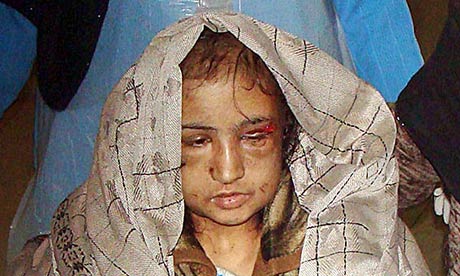
Afghan wife Sahar Gul being taken to hospital. Her in-laws tried her to force her into prostitution
Sahar Gul, then a 15-year-old Afghan wife, being carried to hospital in Baghlan. Her in-laws tortured her to force her into prostitution. Photograph: Jawed Basharat/AP
Human rights activists have warned of an new assault on women's rights in Afghanistan after judges and prosecutors allowed the early release of three people convicted for the brutal torture of a child bride, and conservative lawmakers made an aggressive bid to prevent relatives testifying against each other.
If successful, the small change – introduced covertly into the criminal prosecution code – would stop the vast majority of cases of violence against women from ever reaching court.
Together with the quashing of three convictions for the attempted murder of the teenager Sahar Gul, it marks an alarming two-pronged assault on women's rights by both those who make the laws and those tasked with upholding them.
"The last two months have really been a parade of horrible for women's rights in Afghanistan," said Heather Barr, Afghanistan researcher at Human Rights Watch, warning that the proposed change to the criminal code would leave most abused women with no legal protection against violence.
"Underage marriage, forced marriage, domestic violence, sale of women – these crimes are almost always committed against women by family members, whether through birth or through marriage."
The 10-year sentences handed down to Gul's tormentors last year was hailed as an important step forward, after her case horrified Afghanistan and prompted a bout of national soul-searching.
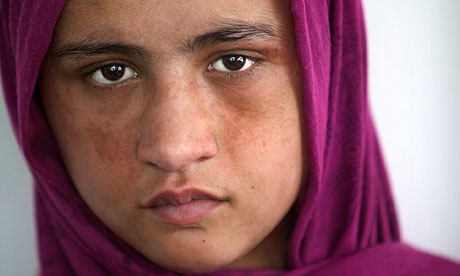
Sold as a wife when she was an illiterate 12-year-old, her in-laws wasted little time embarking on a campaign of almost unimaginable torture. They starved her, chained her in a basement bathroom, beat her, burned her with red-hot metal pipes and pulled her fingernails out.
By the end of her ordeal she could no longer walk, and was rescued from her makeshift prison in a wheelbarrow. But last week, according to her lawyer and women's activists, a court ordered the release of Gul's mother-in-law, father-in-law, and sister-in-law saying there was no proof of abuse.

No evidence

"This was based on the idea that there was no evidence, but the people who would have given evidence didn't know that the hearing was taking place," said Kimberley Motley, a Kabul-based US lawyer who took on Gul's case last week after learning of the release.
Judges ignored the fact that the courtroom was almost empty, with apparently no representation from government prosecutors or the victim, even though both should have been informed under Afghan law.
Sahar Gul, 14, at a women's shelter in Kabul. Sahar Gul at a women's shelter in Kabul, Afghanistan, last year. She was not told about the release of her three in-laws, her lawyer said. Photograph: Kuni Takahashi/New York Times/Redux/eyevine "Sahar Gul was not told about this," Motley said. "The prosecutor didn't show up or wasn't informed. I believe the only person in court was the defence lawyer for the accused."


Read More Here


Enhanced by Zemanta