Showing posts with label Gardening. Show all posts

Tuesday, November 24, 2015

New reports indicate that Monarch Butterfly populations are actually beginning to grow again.


Monarch Butterfly Populations Are Rising Again After Years In Decline


New reports indicate that Monarch Butterfly populations are actually beginning to grow again.


Credit: Wikipedia
Credit: Wikipedia
.............................................................................................................


This year, we have published several stories about the dwindling monarch butterfly populations and some of the efforts that have been made to save the species. New reports last week have indicated that these efforts may actually be paying off, because Monarch populations are actually beginning to grow again. In Mexico, one of the main breeding areas for these butterflies, scientists believe that this year there will be at least three times as many of them this year than there was last year.
During a recent conference at the Piedra Herrada research reserve, U.S. Interior Secretary Sally Jewell said that Mexico and the US will be working together to create pesticide-free zones for the butterflies to flourish.

“Mexico, the U.S., and Canada have many species that don’t know our political borders, that cross the borders freely,” she said during a conference at the Piedra Herrada research reserve, adding that the three countries will be working together to rebuild the populations.

She told the audience that they hope to see “225 million monarch butterflies returning right here to Mexico every year. We believe we can get there by working together and it sounds like we may be on our way, we hope.”

“We are very glad to report that calculations done before the landfall of Hurricane Patricia showed the monarch presence could cover up to four hectares, a clear indication that the efforts mentioned by Secretary Jewell are having a positive effect,” Environment Secretary Rafael Pacchiano said.

“We estimate that the butterfly population that arrives at the reserve is as much as three and could reach four times the surface area it occupied last season,” he added.
For years, environmental experts have been warning about the steady decline of monarch butterfly populations. The causes of this decline have been largely speculation until recently, but a new report suggests that Monsanto’s herbicide Roundup Ready could be responsible.
 
The report was recently released by US environment watchdog Center for Food Safety and sheds new light on what has been happening with monarch butterfly populations.
According to the report, Monsanto’s herbicide has wiped out 99 percent of milkweed in corn and soybean fields in the US Midwest since 1999.
This has resulted in a decline of nearly 90 percent in monarch butterfly populations in the past 20 years.

Without the milkweed, the butterfly’s food supply is entirely cut out because caterpillars eat only milkweed plants, and then milkweed is needed again when it is time for the butterfly to lay their eggs.
Although this is a very serious problem, it is something that the average person can help to solve. Anyone with some space in their lawn or garden can plant milkweed to help reverse the trend that Monsanto started.
Below are some PDF guides which give you step by step instructions on how to plant milkweed and create habitats for monarch butterflies:
  1. Planting Native Milkweed Species
  2. Avoiding Non-Native Species
  3. Create Habitat for Monarchs
  4. Gardening for Monarchs
 

John Vibes is an author and researcher who organizes a number of large events including the Free Your Mind Conference. He also has a publishing company where he offers a censorship free platform for both fiction and non-fiction writers. You can contact him and stay connected to his work at his Facebook page. You can purchase his books, or get your own book published at his website www.JohnVibes.com. This article (Monarch Butterfly Populations Are Rising Again After Years In Decline) was made available via

True Activist

True Activist Exposing the truth one lie at a time

Tuesday, October 6, 2015

How Much Food Can I Grow Around My House?


Uploaded on Dec 5, 2007
Peak Moment 87: In summer 2006 Judy Alexander embarked on an experiment to see how much food she could grow, and how many neighbors could benefit, from the garden around her house. Check out her homegrown rainwater collection and irrigation system - watering her 60+ edible crops. Meet the bees, the chickens and the worms. And catch her joy in producing so much food for so little effort.

Thursday, September 10, 2015

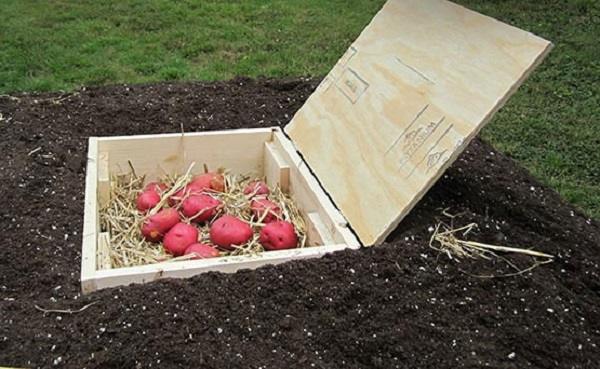
5 Root Cellar Alternatives That Are Low-Cost And Easy-To-Make


Off The Grid News

Written by: Tricia Drevets Off-Grid Foods
Image source: HomeDepot Image source: HomeDepot   During the summer there is nothing better than picking fruits and vegetables from your garden and then enjoying them at your dinner table that evening. The taste, freshness and convenience cannot be beat. But how can you continue to enjoy fresh homegrown produce when they’re not in season? One way is with a root cellar. It is with the use of root cellars that our ancestors provided nutritious food to their families all year round. Long before refrigerators were in every kitchen, most homes included some sort of root cellar that was designed to preserve nature’s bounty. Root cellars today can take many forms, from very basic to more complicated. But all of them provide a cool, ventilated, humid and dark space to store fresh food. Foods that do well in a root cellar environment include apples, pears, oranges, potatoes, carrots, beets, onions, garlic, winter squash and nuts. 


Read More Here

Wednesday, September 9, 2015

A Plan for Food Self-Sufficiency

 
Planning a garden in advance can help you enjoy local, homegrown food year-round! Estimate how much to grow or buy and learn how to achieve food security with these guidelines.
By Cindy Conner October/November 2012
A well-planned garden can provide your family with the freshest, most nutritious produce, plus a more secure, self-reliant lifestyle.
Photo By Matthew T. Stallbaumer
Slideshow
Providing high-quality food for your family year-round takes foresight and planning, plus healthy doses of commitment and follow-through. Whether you grow as much of your food as you can or you source it from local producers, the guidelines here will help you decide how much to produce or purchase. The charts linked to in “Plan How Much to Grow” later in this article will also help you estimate how much space you’ll need — both in your garden to grow the crops, and in your home and pantry or root cellar to store preserved foods. Here’s a step-by-step plan to help you make the best use of your garden space (or farmers markets) to move toward homestead food self-sufficiency.

1. Establish Your Goals

Make a list of the foods you and your family eat now — and note the quantities as well. The charts linked to in “Plan How Much to Grow” further along in this article assume a half-cup serving size for fruits, vegetables and legumes, and a 2-ounce serving for dry grains. If your servings differ from the charts, be sure to adjust your calculations accordingly. Decide what you’d like to grow, noting the foods your family prefers and recognizing that not every crop will grow in every climate. Research different crop varieties: Some crops — such as melons — require long, hot days to mature, but certain varieties need fewer days to reach maturity, which allows them to be grown in areas with a shorter growing season. Don’t be afraid to start small and build gradually toward food self-sufficiency. A good starting goal might be to produce all of a certain crop that you use. An early milestone for me was growing all of the green beans we needed for a year and all of the ingredients for the spaghetti sauce I canned. Maybe you’ll aim to eat at least one thing from your garden each day. Keep your goals in mind as you’re planning a garden.
Read More Here

Friday, November 15, 2013

Become self-sufficient in food and housing with EnviroNative Training Initiatives

Becky Big Canoe: Become self-sufficient in food and housing with EnviroNative Training Initiatives

Alfred Lambremont Webre Alfred Lambremont Webre


Published on Nov 15, 2013
VIDEO: Becky Big Canoe: Become sustainable in food and housing with EnviroNative Training Initiatives
WATCH ON YOU TUBE:
http://www.youtube.com/watch?v=0clxix...

VANCOUVER, B.C. - In an interview with Alfred Lambremont Webre, Becky Big Canoe of Ontario, Canada describes becoming sustainable in food and housing with EnviroNative Training Initatives.

EnviroNative Training Initiatives, which Becky Big Canoe founded, is a not-for-profit organization set up to design and deliver training programs in food security, entrepreneur skills and natural building. Their target clientele is First Nations women and at risk youth.

You can support this initiative in self sufficiency by voting at:

http://www.avivacommunityfund.org/ide...

Information:

EnviroNative Training Initatives

https://www.facebook.com/environative...

Becky Big Canoe

https://www.facebook.com/becky.bigcanoe

Thank you.


Becky Big Canoe: Become sustainable in food and housing with EnviroNative Training Initiatives

http://bit.ly/1ihreLN

..........
Enhanced by Zemanta

Wednesday, October 2, 2013

Permaculture Paradise at Val's Garden!


johnny mars


Published on Mar 22, 2013
 
Val and Eli take us on a tour of their permagarden in Jacksonville FL. They have created a wonderful, natural space filled with self-sustaining fruits, vegetables, herbs, medicines, colors, water, fragrances, and wildlife.... at their fingertips.

View more permaculture videos here: http://www.youtube.com/playlist?list=...

Val can be reached at 904-476-6388, www.meetup.com/Permaculturejax.com, and at www.thefoodparkproject.com.
Enhanced by Zemanta

Sunday, September 22, 2013

The steps to a bountiful fall garden are simple : Fall in love with fall gardening

Food Freedom News


Fall in love with fall gardening

fall veggiesBy Vicki Mattern
Mother Earth News
With tomatoes, peppers and melons now hitting their late summer stride, it’s easy to forget that autumn and early winter can be as abundant as spring and summer. Those who seize the opportunity for a second season of growth will find the planning and planting well worthwhile.
The steps to a bountiful fall garden are simple. Choose crops suited to fall growing conditions (see the list of crops and recommended varieties at the end of this article). Ensure your chosen site has organically enriched soil and adequate water. And start now. If you don’t have seeds on hand, use our online seed finder.
You can replace spring-planted lettuces, peas and brassicas (broccoli and its relatives) with new plantings that mature in fall. Seeds and transplants will take off quickly in the warm summer soil. They’ll appreciate cooler nights, too.
Look forward to peak flavor and performance for many crops that do not prosper in summer heat. Lower temperatures are ideal for producing crisp lettuces without the bitterness or bolting that can occur in hot weather. Frost-kissed kale, Brussels sprouts and cabbage have a special sweetness. Carrots, beets and turnips also thrive in the fall garden and, after harvest, can be kept in a pantry or root cellar so you can enjoy their goodness well into winter. Collards, mustard and other greens also like cool weather.

Favored Crops for Fall

When deciding what to plant now for fall harvest, gardeners throughout most of the country should think greens and root vegetables, advises John Navazio, a plant-breeding and seed specialist at Washington State University and senior scientist for the Organic Seed Alliance in Port Townsend, Wash., which conducts annual tests of crops and varieties to evaluate their cold hardiness.
Leafy greens (such as lettuces, spinach, arugula, chard and mâche) and root veggies (such as beets, carrots, turnips, radishes and rutabagas) as well as brassicas (including broccoli, cabbage, cauliflower, collards, kale and Chinese cabbage) and peas will all thrive in the cooler weather and shorter days of fall. In many regions, some of these cold-hardy crops will even survive the winter to produce a second harvest in spring. (See “Stretching the Season,” below.)
If you garden in the South or other areas with mild winters, you can grow all of those crops as well as heat-loving favorites. “Here, we can set out tomato transplants in late August,” says David Pitre, owner of Tecolote Farm, a certified organic farm near Austin, Texas. Pitre also plants okra, eggplant, peppers, winter squash, cucumbers and potatoes in August and September for winter harvest. Plant cool-season crops in the garden after temperatures cool — late September or later.
Fall is also prime garden season in the Pacific Northwest, where abundant rain and cool (but not frigid) temperatures are ideal for growing brassicas, root crops and leafy greens planted in mid- to late summer. The hardiest of these crops often hang on well into winter if given protection, such as row covers or cold frames.
(For full details on which crops to plant now in your region for fall and winter harvests, check out our What to Plant Now pages, or sign up for a free, 30-day trial of our online Vegetable Garden Planner — MOTHER)

Hardy Fall Varieties

After you’ve decided which crops to grow for fall harvest, zero in on specific varieties. “There are big differences in cold hardiness among varieties,” Navazio says. “Some are better able to photosynthesize at cooler temperatures.”
For the past several years, the Alliance has been conducting trials of as many as 170 varieties of 11 different crops for their quality and performance in fall and winter. Among them, kale, radicchio and Swiss chard have been tested extensively and confirmed cold hardy to 14 degrees Fahrenheit with no protection. Several varieties stood out for the Alliance and market gardeners.
Broccolis. Opt for varieties that produce plenty of side shoots, rather than a single large head. “‘Diplomat’ and ‘Marathon’ can survive the heat of late summer and thrive when cool weather arrives in fall, producing a second cutting as late as Thanksgiving,” says Elizabeth Keen, co-owner of Indian Line Farm, a 17-acre organic operation in Great Barrington, Mass. In Austin, Texas, Carol Ann Sayle, co-owner of Boggy Creek Farm, grows ‘Packman’ and ‘Diplomat’ for harvest by Thanksgiving and cuts ‘Marathon’ by Christmas.
Carrots. Consider storage ability when choosing carrots for your fall garden, says Thomas Case, owner of Arethusa Farm, a certified organic farm near Burlington, Vt. Both Keen and Case like ‘Bolero’ for fall growing and winter storage.
Lettuces. Whether you garden in the North or South, lettuces are a mainstay of the fall garden. Several European heirloom varieties are especially durable: ‘Rouge d’Hiver’ (a flavorful romaine whose leaves blush red in cool weather), ‘Marvel of Four Seasons’ (also called ‘Merveille de Quatre Saisons,’ a sweet and tender butterhead with red-edged outer leaves) and ‘Winter Density’ (also called ‘Craquerelle du Midi,’ a compact bibb type with deep green leaves) are good bets. Even in Zone 5, these lettuces will hang on into December and, with the protection of heavy mulch or a cold frame, will often return with renewed vigor in early spring.
When the lettuces go dormant in winter, you can count on mâche to fill your salad bowl. Mâche (or corn salad) is delicious and will survive and continue to grow in colder weather longer than any other salad green, says Eliot Coleman in his classic book Four-Season Harvest. In his Zone 5 Maine garden, Coleman seeds mâche inside a cold frame from September through early November for harvest until April, when overwintered lettuce resumes its growth.
Kale. Of the popular Lacinato-type kales, ‘Black Tuscan’ consistently rated best in the Alliance tests for cold hardiness, vigor, flavor and stature. The Alliance also recommends ‘Winterbor’ (a tall Dutch kale), ‘Red Russian’ and ‘White Russian’ (two tasty Siberian kales). It’s hard to go wrong with kale in fall, no matter the variety: All have superior flavor when temperatures drop into the 20s or below. “Sugar is the plant’s natural antifreeze, so as the temperature drops, more starches are converted to sugar, sweetening the flavor of kale and other brassicas,” Navazio says.
Radicchio. Still considered a specialty vegetable by many, radicchio thrives in the cool conditions of fall and offers a wealth of possibilities in the kitchen. Of the more than 20 varieties tested by the Alliance in the past two years, a few Italian open-pollinated varieties proved most cold-hardy. ‘Variegata di Luisa Tardiva’ and ‘Variegata di Castlefranco’ produce upright, variegated heads similar to romaine lettuce, with beautiful hearts and radicchio’s signature bitterness.
“Grown in cool weather, they are delightful, with a mild spicy flavor,” Navazio says. Although some of the plants’ outer leaves were “toasted” at 14 degrees in the Alliance trials, you can strip off any damaged leaves and enjoy the tasty interior.
Navazio suggests slicing the heads, then wilting the leaves in a pan with cipollini onions, as cooks do in Italy, or dressing the heads lightly with olive oil and roasting them on the grill or a campfire. For cold hardiness and flavor, Navazio also recommends ‘Rossa di Verona’ and ‘Grumolo Rossa.’


Read More Here


Enhanced by Zemanta

Sunday, July 28, 2013

Self-Seeding Crops You’ll Never Need to Replant

MOTHER EARTH NEWS


Manage these vigorous self-seeders so you’ll never have to buy seeds again.


By Barbara Pleasant
August/September 2010

self-seeding crops
Letting crops flower and go to seed also supports beneficial insects!
ILLUSTRATION: ELAYNE SEARS
One of the characteristics of a truly sustainable garden is that it produces at least some of its own seed. This is most often done when gardeners select, harvest and store seeds until the proper time for planting the following year. But some self-seeding crops produce seeds so readily that as long as you give them time to flower and mature, and set seed, you will always have free plants growing in your garden. You can simply let the seeds fall where they are, or toss pieces of the seed heads into the corners of your garden, or whichever area you want them in — no harvesting, storing or replanting required. With most self-seeding vegetables, herbs and annual flowers, you’ll just need to learn to recognize the seedlings so you don’t hoe them down. Should seedlings require relocation, you can simply lift and move them — after all, they are sturdy field-grown seedlings.
In addition to getting all the free garden plants you need (and some to share with family and friends), nurturing self-seeders is also a great way to provide a diversity of flowers that supply pollen and nectar for beneficial insects. Self-seeding flowers, herbs and vegetables that show up in early spring include arugula, calendula, chamomile, cilantro, dill, breadseed poppies and brilliant red orach (mountain spinach). Nasturtiums, amaranth, New Zealand spinach, and even basil or zinnias appear later, after the soil has warmed.
Starting a new colony of any of these annuals is usually a simple matter of lopping off armloads of brittle, seedbearing stems in the fall, and dumping them where you want the plants to appear the next season. It’s that easy. Most of the seedlings will appear in the first year after you let seed-bearing plants drop their seeds, with lower numbers popping up in subsequent seasons.
Working with reseeding, or self-sowing, crops saves time and trouble and often gives excellent results, but a few special techniques and precautions are in order. Some plants that self-sow too freely — especially perennials such as garlic chives or horseradish — will cross the line into weediness if not handled with care.

Spring Seeds for Fall Crops

The first group of plants to try as self-sown crops — both because they’re the easiest and they’ll be ready the same year — are those that tend to bolt in late spring. If allowed to bloom and set seed, dill, radishes, arugula, cilantro, broccoli raab, turnips and any kind of mustard will produce ripe seeds in time for fall reseeding in most climates. Lettuce will take a little longer, but often gives good results in Zone 5 or warmer.
One way to encourage self-seeders is to select vigorous plants from a larger planting, and let these plants grow unharvested until they bloom and produce seeds. This will work well enough, but it’s often bothersome to have one lone turnip holding up the renovation of a planting bed. To get around this problem, use a Noah’s ark approach: Set aside a bed or row and transplant pairs of plants being grown for seed into the ark bed. As the weeks pass, weed, water and stake up seed-bearing branches to keep them clean, but don’t pick from the “seed ark” bed.


Read More  Here

Enhanced by Zemanta

Saturday, July 27, 2013

10 Tips on How to Have a Successful Desert Vegetable Garden in the Heat of Summer


growingyourgreens


Published on Jul 26, 2013
John from http://www.growingyourgreens.com/ shares with you his 10 reasons why he has been successful gardening in 117 degree dry, desert heat, when others have not. This episode will be of value if you live in the desert or not as these tips can be applied for every gardener no matter where you live. After watching this episode you will know 10 proven methods to improve your organic vegetable garden whether you live in the desert or anywhere else.
Enhanced by Zemanta