Showing posts with label Activism. Show all posts

Wednesday, November 25, 2015

Plastics in the world's oceans, whether floating or resting at the bottom, is a problem that's on the rise, and is said to have "reached crisis proportion."


Published on
by

Biodegradable is Bunk: World's 'Ocean Waste Baskets' Still Filled With Plastic Trash

Such products 'will not bring about a significant decrease either in the quantity of plastic entering the ocean or the risk of physical and chemical impacts on the marine environment,' UN report states.
 
 
Pieces of plastic litter a black rock beach on the island of Hawaii in 2008.  (Photo: LCDR Eric Johnson, NOAA Corps./via flickr/cc)

Plastics in the world's oceans, whether floating or resting at the bottom, is a problem that's on the rise, and is said to have "reached crisis proportion."

And while they may be assumed to be more eco-friendly, plastics labeled "biodegradable" still pose a threat to marine environments, a new United Nations study has found.

The report from the UN Environment Programme (UNEP), Biodegradable Plastics and Marine Litter. Misconceptions, Concerns and Impacts on Marine Environments (pdf), explains how these products still fail to tackle the growing problem.

The agency's executive director, Achim Steiner, underscored the magnitude of the problem. "Recent estimates from UNEP have shown as much as 20 million tonnes of plastic end up in the world's oceans each year. Once in the ocean, plastic does not go away, but breaks down into microplastic particles."

The report notes that just what proportion of this plastic is biodegradable versus non-biodegradable has yet to be analyzed.

One of the problems, the report states, is that in order for some of the plastic debris to be completely broken down, conditions found in industrial compositing units that can achieve prolonged temperatures of above 50°C are needed. Yet those conditions "are rarely if ever met in the marine environment."

And while some have the inclusion of a pro-oxidant, which would induce degradation, "[t]he fate of these fragments (microplastics) is unclear, but it should be assumed that oxo-degradable polymers will add to the quantity of microplastics in the oceans, until overwhelming independent evidence suggests otherwise."

Contributing to the problem, the report says, is evidence suggesting the biodegradable label could make the public more likely to litter.

The report concludes that "the adoption of plastic products labelled as 'biodegradable' will not bring about a significant decrease either in the quantity of plastic entering the ocean or the risk of physical and chemical impacts on the marine environment, on the balance of current scientific evidence."
Peter Kershaw, one of the authors of the study, put the problem in blunt terms.

"Essentially the ocean is being used as a waste basket and the waste basket is getting fuller and fuller, and so the impacts of that plastic litter are just going to keep on increasing," he toldCBC News.


..........................................................................................................

Tuesday, November 24, 2015

New reports indicate that Monarch Butterfly populations are actually beginning to grow again.


Monarch Butterfly Populations Are Rising Again After Years In Decline


New reports indicate that Monarch Butterfly populations are actually beginning to grow again.


Credit: Wikipedia
Credit: Wikipedia
.............................................................................................................


This year, we have published several stories about the dwindling monarch butterfly populations and some of the efforts that have been made to save the species. New reports last week have indicated that these efforts may actually be paying off, because Monarch populations are actually beginning to grow again. In Mexico, one of the main breeding areas for these butterflies, scientists believe that this year there will be at least three times as many of them this year than there was last year.
During a recent conference at the Piedra Herrada research reserve, U.S. Interior Secretary Sally Jewell said that Mexico and the US will be working together to create pesticide-free zones for the butterflies to flourish.

“Mexico, the U.S., and Canada have many species that don’t know our political borders, that cross the borders freely,” she said during a conference at the Piedra Herrada research reserve, adding that the three countries will be working together to rebuild the populations.

She told the audience that they hope to see “225 million monarch butterflies returning right here to Mexico every year. We believe we can get there by working together and it sounds like we may be on our way, we hope.”

“We are very glad to report that calculations done before the landfall of Hurricane Patricia showed the monarch presence could cover up to four hectares, a clear indication that the efforts mentioned by Secretary Jewell are having a positive effect,” Environment Secretary Rafael Pacchiano said.

“We estimate that the butterfly population that arrives at the reserve is as much as three and could reach four times the surface area it occupied last season,” he added.
For years, environmental experts have been warning about the steady decline of monarch butterfly populations. The causes of this decline have been largely speculation until recently, but a new report suggests that Monsanto’s herbicide Roundup Ready could be responsible.
 
The report was recently released by US environment watchdog Center for Food Safety and sheds new light on what has been happening with monarch butterfly populations.
According to the report, Monsanto’s herbicide has wiped out 99 percent of milkweed in corn and soybean fields in the US Midwest since 1999.
This has resulted in a decline of nearly 90 percent in monarch butterfly populations in the past 20 years.

Without the milkweed, the butterfly’s food supply is entirely cut out because caterpillars eat only milkweed plants, and then milkweed is needed again when it is time for the butterfly to lay their eggs.
Although this is a very serious problem, it is something that the average person can help to solve. Anyone with some space in their lawn or garden can plant milkweed to help reverse the trend that Monsanto started.
Below are some PDF guides which give you step by step instructions on how to plant milkweed and create habitats for monarch butterflies:
  1. Planting Native Milkweed Species
  2. Avoiding Non-Native Species
  3. Create Habitat for Monarchs
  4. Gardening for Monarchs
 

John Vibes is an author and researcher who organizes a number of large events including the Free Your Mind Conference. He also has a publishing company where he offers a censorship free platform for both fiction and non-fiction writers. You can contact him and stay connected to his work at his Facebook page. You can purchase his books, or get your own book published at his website www.JohnVibes.com. This article (Monarch Butterfly Populations Are Rising Again After Years In Decline) was made available via

True Activist

True Activist Exposing the truth one lie at a time

Monday, November 16, 2015

Hmmmm Factor..... Did you think the genetically modified pig was gone? Think Again.


Natural Blaze

Two New GE Pigs Want to Go To the Market


pig-752555_640

By Heather Callaghan


Did you think the genetically modified pig was gone? It is true that Canada’s “Enviro Pig” was scrapped in 2012 after consumer backlash and lack of university funding. That vacancy mainly left genetically modified salmon in the running to become the very first commercial GM animal.
But there are two new types of engineered pigs poised for approval in their respective countries. Now, with the secret Trans Pacific Partnership out in the open, it becomes clear that the deal opens the door for a swarm of global biotech ventures that can more easily glide their wares across country boundaries.

Whereas Enviro Pig’s genetic splicing was supposedly intended to cut down on phosphorous waste that kills waterways, two more pigs are vying for public acceptance.

It’s important to note that these animals aren’t “transgenic” like many of the GE crops on the market. That is, they do not contain genes from other species or kingdoms like bacteria. Biotech involves more than GMOs, and some methods currently fall outside of regulation or definition. However, we are still talking genetic engineering.


CBC News reports on them:

  • Bruce Whitelaw and his colleagues at the University of Edinburgh are developing a pig resistant to African swine fever, a devastating disease with no vaccine or cure that has led to hundreds of pigs being slaughtered in Europe to prevent its spread.
  • Jinsu Kim and his colleagues at Seoul National University have developed “double-muscle” pigs that produce twice as much muscle as a regular pig, resulting in higher protein, lower fat pork.


Read More Here

.....................................................................................................

CBC News

Genetically modified pigs raise concerns about food regulation

Regulatory system lacks transparency, critics say

CBC News Posted: Nov 03, 2015 11:50 AM ETLast Updated: Nov 04, 2015 8:59 AM ET


Two kinds of genetically modified pigs are on their way to becoming pork on our dinner plates. If they do, they'll be some of the very first genetically modified animals to enter our food system.
Two kinds of genetically modified pigs are on their way to becoming pork on our dinner plates. If they do, they'll be some of the very first genetically modified animals to enter our food system. (Laszlo Balogh/Reuters)


Close


The Current: GMO pigs' cautionary tale of genetically modified food research 24:43


Two kinds of genetically modified pigs are on their way to becoming pork on our dinner plates. If they do, they'll be some of the very first genetically modified animals to enter our food system, along with genetically modified salmon that is also trying to gain regulatory approval.

But consumers are wary and lack confidence in governments' readiness to regulate this new class of food product, researchers and activists say.

The genetically modified pigs under development are designed to improve pork production in different ways:

  • Bruce Whitelaw and his colleagues at the University of Edinburgh are developing a pig resistant to African swine fever, a devastating disease with no vaccine or cure that has led to hundreds of pigs being slaughtered in Europe to prevent its spread.
  • Jinsu Kim and his colleagues at Seoul National University have developed "double-muscle" pigs that produce twice as much muscle as a regular pig, resulting in higher protein, lower fat pork.

In both cases, researchers have precisely targeted an individual pig gene to create a mutation that turns up or turns down certain genes. The African swine fever resistant pig has an immune gene that is slightly more like a warthog's. The double-muscle pig has a mutation similar to one produced by normal breeding in a muscly cow breed called the Belgian blue.

The pigs aren't "transgenic" — that is, they don't contain genes from other organisms. That makes them unlike some genetically modified crops already on the market, which may contain genes from organisms such as bacteria.


Read More Here


Related Stories

Thursday, November 12, 2015

Astonishing amount of data being collected about your children. “Just think George Orwell, and take it to the nth degree...", states Joel Reidenberg of Fordham Law School.


The astonishing amount of data being collected about your children

 
Resize Text
 
 
November 12 at 9:30 AM  


Parental concerns about student privacy have been rising in recent years amid the growing use by schools, school districts and states use technology to collect mountains of detailed information on students. Last year, a controversial $100 million student data collection project funded by the Gates Foundation and operated by a specially created nonprofit organization called inBloom was forced to shut down because of these concerns, an episode that served as a warning to parents about just how much information about their children is being shared without their knowledge.

Here’s an important piece on the issue by Leonie Haimson and Cheri Kiesecker. Haimson was a leading advocate against the inBloom project who then, along with Rachael Stickland, created the Parent Coalition for Student Privacy, a national alliance of parents and advocates defending the rights of parents and students to protect their data. Kiesecker is a member of the coalition.


By Leonie Haimson and Cheri Kiesecker

 Remember that ominous threat from your childhood, This will go down on your permanent record?” Well, your children’s permanent record is a whole lot bigger today and it may be permanent. Information about your children’s behavior and nearly everything else that a school or state agency knows about them is being tracked, profiled and potentially shared.

During a February 2015 congressional hearing on “How Emerging Technology Affects Student Privacy,” Rep. Glenn Grothman of Wisconsin asked the panel to “provide a summary of all the information collected by the time a student reaches graduate school.” Joel Reidenberg, director of the Center on Law & Information Policy at Fordham Law School, responded:

“Just think George Orwell, and take it to the nth degree. We’re in an environment of surveillance, essentially. It will be an extraordinarily rich data set of your life.”

Most student data is gathered at school via multiple routes; either through children’s online usage or information provided by parents, teachers or other school staff. A student’s education record generally includes demographic information, including race, ethnicity, and income level; discipline records, grades and test scores, disabilities and Individual Education Plans (IEPs), mental health and medical history, counseling records and much more.


Read More Here

Wednesday, November 11, 2015

A history of racially charged incidents dates back generations. Student protests culminate in departure of two University Officials.


.


Before protests, U. of Missouri saw decades of race tension


A woman passes a tent encampment set up by student protesters following an announcement that... Read more
 
COLUMBIA, Mo. (AP) — This week's events at the University of Missouri seemed to unfold rapidly, with little warning. But some students, faculty and alumni say the protests and sudden resignation of the president and chancellor are the culmination of years of racial tension on the state's flagship campus.

The history of racially charged incidents dates back generations.

When the university denied admission to black law school applicant Lloyd Gaines, the issue led to an influential 1938 Supreme Court decision that helped pave the way for the civil rights movement.
Three decades later, during the unrest of the late 1960s, the Legion of Black Collegians emerged at Mizzou to press for increased minority representation among students, staff and faculty — a goal student protesters say remains unmet.

And the 2011 suicide of black swimmer Sasha Menu Courey after she was allegedly raped by several football players led some to question the campus commitment to investigating sexual assaults.
"Who built this university?" asked student government President Payton Head. "Who was building buildings in 1839" when the school was founded?

"Slavery wasn't abolished until 1865," Head said. "But we don't talk about that history here at the University of Missouri."

Head's social media accounts of having racial slurs shouted at him from a passing pickup truck helped spark a renewed protest movement at Missouri that culminated Monday with the resignation of university system President Tim Wolfe. Hours later, the top administrator of the Columbia campus, Chancellor R. Bowen Loftin, was forced out.


Read More Here
........................................................................................................

Timeline of recent events at University of Missouri

 
COLUMBIA, Mo. (AP) — Complaints about the handling of racial and other concerns led to this week's resignation of University of Missouri system President Tim Wolfe and the top administrator of the Columbia campus, Chancellor R. Bowen Loftin. A timeline of key events:

___
AUG. 14: The university announces the elimination of subsidies that help pay health insurance costs for graduate students employed by the school.

___
AUG. 26: Graduate students stage a walkout and rally, in part to oppose the health care cut.

___
SEPT. 12: Missouri Student Association President Payton Head posts on Facebook that young people in a pickup truck yelled racial slurs at him. It's the first of many racial incidents on the Columbia campus this fall. Sit-ins, walkouts and other protests follow, fueled by concern that administrators are not addressing the tension.

___
SEPT. 16: The university and Planned Parenthood announce the end of their 26-year relationship after state lawmakers start investigating abortions performed at the university clinics.
___

SEPT. 24: A "Racism Lives Here" rally takes place on campus.

___
SEPT. 29: An estimated 1,000 protesters turn out for a rally in support of Planned Parenthood.

___
OCT. 5: A drunk man yells racial slurs at members of the Legion of Black Collegians. Loftin, on Twitter and in a video message, expresses anger at the slurs.

___
OCT. 6: Students and faculty stage a sit-in against racism and administrative inaction.

___
OCT. 8: The university announces that freshmen will be required to undergo diversity training beginning in January, and the program will eventually be expanded to include all students, faculty and staff.


Read More Here

Thursday, November 5, 2015

The same EPA that unleashed massive pollution in Colorado river now denying risk of harmful radioactive activity in St. Louis


NaturalNews's profile photo
NaturalNews
EPA


(NaturalNews) A five-year fire is burning beneath a landfill in a St. Louis suburb, and it's rapidly approaching an old cache of nuclear waste.

At present, St. Louis County emergency officials are unsure whether or not the fire will set off a reaction that releases a radioactive plume over the city. An emergency plan was put together in October 2014 to "save lives in the event of a catastrophic event at the West Lake Landfill."

St. Louis County officials warn, "There is a potential for radioactive fallout to be released in the smoke plume and spread throughout the region."

Many residents are taking precautions; some are buying gas masks, while others are considering moving away. Just recently, over 500 local residents discussed the precarious situation at a church meeting which usually draws in less than 50 people.

EPA not worried about the fire or the nuclear waste

Nothing stands in the way of the uncontrollable landfill fire, which is smoldering hot underneath the trash of the West Lake Landfill of Bridgeton County, St. Louis. This "smoldering event" is not uncommon. Fires ignite and smolder under landfills because the trash becomes so compact and hot. In this case, the fire is brewing less than a quarter mile from an old deposit of nuclear waste that threatens to spread cancer-causing radon gas.

Surprisingly, the Environmental Protection Agency (EPA) isn't taking the situation very seriously.

EPA officials admit that although the waste may eventually emit radon gas, it won't affect anything outside the landfill property. This is the same EPA that polluted the Colorado River with 3 million gallons of toxic sludge full of lead, arsenic and other heavy metals. EPA contractors breached a mine, sending the sludge flowing into the Animas river, which quickly turned putrid and murky. That pollution has now spread to New Mexico, Utah and Arizona, infiltrating the countryside with toxic elements. Why should anyone in St. Louis County trust the EPA with radioactive waste?

To make matters worse, the EPA isn't even worried about the fire reaching the nuclear waste. "We just do not agree with the finding that the subsurface smoldering event is approaching the radiologically impacted material," said Mary Peterson, director of the Superfund division for EPA Region 7.

There have been no plans to remove the radioactive waste as of yet, leaving local residents baffled and worried. Most residents were unaware of the existence of the radioactive waste, which had been dumped there illegally four decades ago. If it weren't for activists educating the public about the waste, no one would know.

Radioactive waste comes back to haunt St. Louis

The radioactive waste includes 8,700 tons of leached barium sulfate residue. It was illegally dumped in the West Lake Landfill by Cotter Corporation sometime after World War II and wasn't discovered by investigators until 1973. The radioactive waste was left behind due to the mishandling of uranium by Mallinckrodt Chemical Works, a company that started out working for the federal government's Manhattan Project.

Since 1990, the West Lake Landfill has been managed by the EPA and deemed a Superfund site. The U.S. Department of Health and Human Services Agency for Toxic Substances and Disease Registry recently warned all agencies not to disturb the surface of the landfill. They warned that radium-226, radon-222 and radium-228 could be released into the air, putting people near the landfill at risk.

The agency reported that radon levels in the area are often measured above regulations "by as much as 10 to 25 times at individual surface test locations." Moreover, radium increases people's risk of developing bone, liver and breast cancer.

The EPA is downplaying the potential for a Chernobyl or Fukushima-like disaster, but residents have every reason not to trust the agency's guesswork, given its decades-long refusal to safely remove the radioactive material from the area.

Sources:
LATimes.com

Collapse.news

STLToday.com

WashingtonTimes.com
............................................................................................

About NaturalNews

The NaturalNews Network is a non-profit collection of public education websites covering topics that empower individuals to make positive changes in their health, environmental sensitivity, consumer choices and informed skepticism. The NaturalNews Network is owned and operated by Truth Publishing International, Ltd., a Taiwan corporation. It is not recognized as a 501(c)3 non-profit in the United States, but it operates without a profit incentive, and its key writer, Mike Adams, receives absolutely no payment for his time, articles or books other than reimbursement for items purchased in order to conduct product reviews.

The vast majority of our content is freely given away at no charge. We offer thousands of articles and dozens of downloadable reports and guides (like the Honest Food Guide) that are designed to educate and empower individuals, families and communities so that they may experience improved health, awareness and life fulfillment.
Learn More About Natural News Here

.................................................................................................

stl today.com

Residents demand answers about radioactive Bridgeton landfill

October 15, 2015 10:45 pm  • 


Tonya Mason, who works just feet away from the fence line of Republic Services' landfill in Bridgeton, expresses anger that the air from burning underground material has never been tested for contaminants on Thursday, Oct. 15, 2015 at a meeting by Just Moms at John Calvin Presbyterian Church. Hundreds of people gathered to hear about the ongoing problems at the site. Photo by Christian Gooden, cgooden@post-dispatch.com


More than 40 years ago, radioactive waste was dumped at the West Lake Landfill in Bridgeton. The decades since have been filled with legal and political moves that have not gotten the site cleaned up.
Now a growing number of residents want to know how dangerous it is to live and work in the area as a fire burns underground in the adjoining Bridgeton Landfill. More than 500 people showed up at a Bridgeton church on Thursday for a meeting organized by residents. The monthly meetings held for the last two years typically attract no more than 50.


The surge in public interest comes after state reports showed the fire is moving toward the nuclear waste, and radioactive materials can be found in soil, groundwater and trees outside the perimeter of the landfill.

At least six school districts have sent letters home in the last week outlining their plans for a potential nuclear emergency. St. Louis County recently released its own emergency evacuation plan that was written last year.

Underground fires are common in landfills as buried garbage can get hot, much like the bottom of a compost pile. Typically they are monitored and allowed to burn out. But none of the fires have gotten so close to nuclear waste, which was created during the World War II era for St. Louis’ part in the production of the atomic bomb.


Read More Here

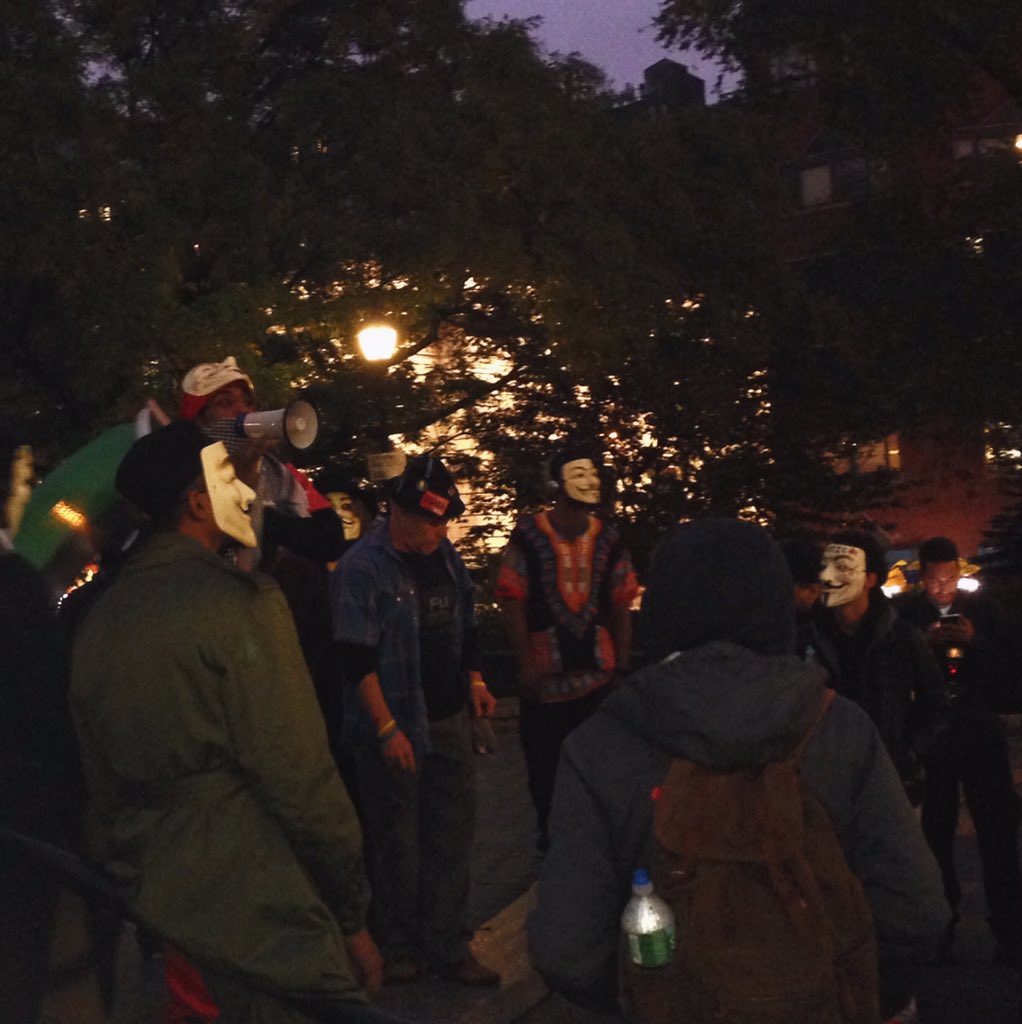
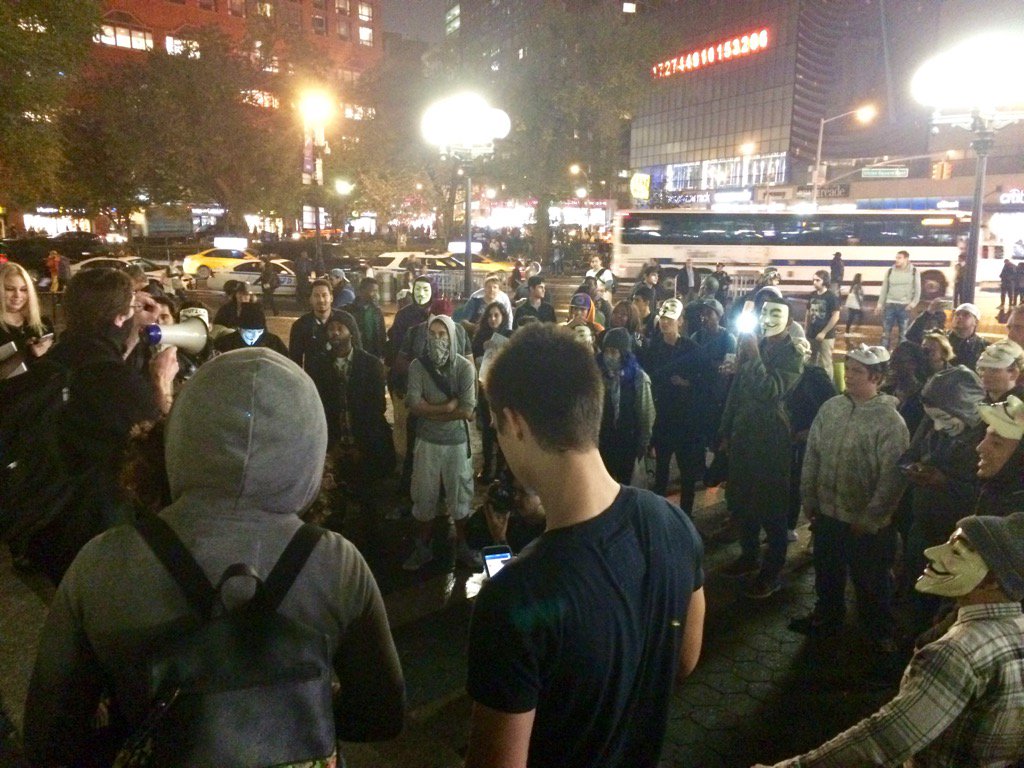
2015 Million Mask March Live updates

Members of the Anonymous Army, with their signature Guy Fawkes masks, gather in front of the White House during their protest in Washington, November 5, 2015. © Gary Cameron
Anonymous-inspired activists are taking to the streets across the globe as the Million Mask March circles the world. Hiding behind symbolic Anonymous masks, the demonstrators are protesting censorship, government corruption, and police brutality.
05 November 2015


22:30 GMT


People have started gathering at New York City's Union Square.


View image on Twitter


View image on Twitter

  22:04 GMT In Washington, DC, participants chanted "Hands up, don't shoot" while marching down the street.


View image on Twitter

Tuesday, November 3, 2015

EPA Proposes Extended Ban on Neurotoxic Pesticide Sprayed on Crops


Banned for household use since 2000
 
pesticide-field-sprayings-735-250
 
by Julie Fidler
Posted on November 1, 2015
 
 
The U.S. Environmental Protection Agency (EPA) announced Friday a proposal that would ban a pesticide commonly sprayed on citrus fruits, almonds, and other crops.


Chlorpyrifos has been in use since 1965 as an insecticide for oranges, apples, cherries, grapes, broccoli, and asparagus. Dozens of farmworkers have been sickened by chlorpyrifos is recent years. In September 2014, a coalition of environmental health groups sued the EPA, asking the agency to ban the toxic chemical.
 
The agency cited scientific evidence in defense of its ban on chlorpyrifos for household use in 2000. Prior to the ban, chlorpyrifos was the most widely used household pesticide in the U.S. Sold as Dursban, the Dow-made chemical was found in flea collars and was routinely used to kill household pests, such as roaches, termites and ants.

At the time, the agency warned that farmworkers who mixed chlorpyrifos, sold for farms as Lorsban, or applied it using backpack sprayers or open-cab tractors faced a potentially unacceptable level of risk. The agency also said it needed to research how chlorpyrifos drifting from nearby fields or tracked home on clothing put children’s health at risk.

The National Resources Defense Council (NRDC) and Pesticide Action Network North America (PANNA) say that chlorpyrifos interferes with the brain development of fetuses, infants and children. [1] It has also been found to cause genetic damage in children, though it is reversible, and one study linked the insecticide to an increased risk of autism in unborn children.

Read More Here

Keystone XL pipeline on hold as builder asks U.S. to suspend permit process


President Obama arrives at the TransCanada Stillwater Pipe Yard in Cushing, Okla. on March 22, 2012. (Associated Press)
President Obama arrives at the TransCanada Stillwater Pipe Yard in Cushing, Okla. on March 22, 2012. (Associated Press) more >
- The Washington Times - Updated: 9:28 p.m. on Monday, November 2, 2015
The company proposing to build the Keystone XL oil pipeline asked the State Department on Monday to halt indefinitely its ongoing review of the massive project, adding new delays and uncertainties, and possibly ensuring that final word will come from President Obama’s successor.
Amid legal challenges in Nebraska — ground zero in the fight over the project — TransCanada officials sent a letter to Secretary of State John F. Kerry and called on the administration to cease immediately its Keystone approval process.

The move raises a real possibility Mr. Obama will not be the one to make a decision on the pipeline and that the next president, perhaps one more inclined to back new oil-and-gas infrastructure in the U.S., will be the final arbiter.

Powerful environmental groups quickly condemned TransCanada’s request and said it’s clear the company simply wants to delay a decision until January 2017, when a Republican may enter the White House.


Read More Here

“Building a better future through collective action”. Anonymous , UK bonfire night Million Mask March


Anonymous plot bonfire night Million Mask March

 
Protesters hold up their Guy Fawkes masks on the Liberty Bridge during a demonstration by supporters of the Anonymous movement as part of the global "Million Mask March" protests, in Budapest, November 5, 2014. © Bernadett Szabo
 
 
Activist collective Anonymous have released details of the 2015 Million Mask March, which will see coordinated demonstrations in cities across the globe protesting against corruption, human rights abuses and censorship.
 
Following in the footsteps of previous marches, the worldwide demonstration will take place on November 5, coinciding with bonfire night in the UK.

This year’s message is “building a better future through collective action,” a statement from the group released on Monday reads.

The London march in 2014 attracted over 1,000 participants who marched through the city center wearing distinctive Guy Fawkes masks, which have become the unofficial emblem of the movement.
Fawkes, part of a band of persecuted English Catholics, was captured and executed by the British state after attempting to blow up the Houses of Parliament in 1605. His image was popularized by the 2005 film adaptation of the Alan Moore graphic novel V for Vendetta.


Read More Here

Sunday, November 1, 2015

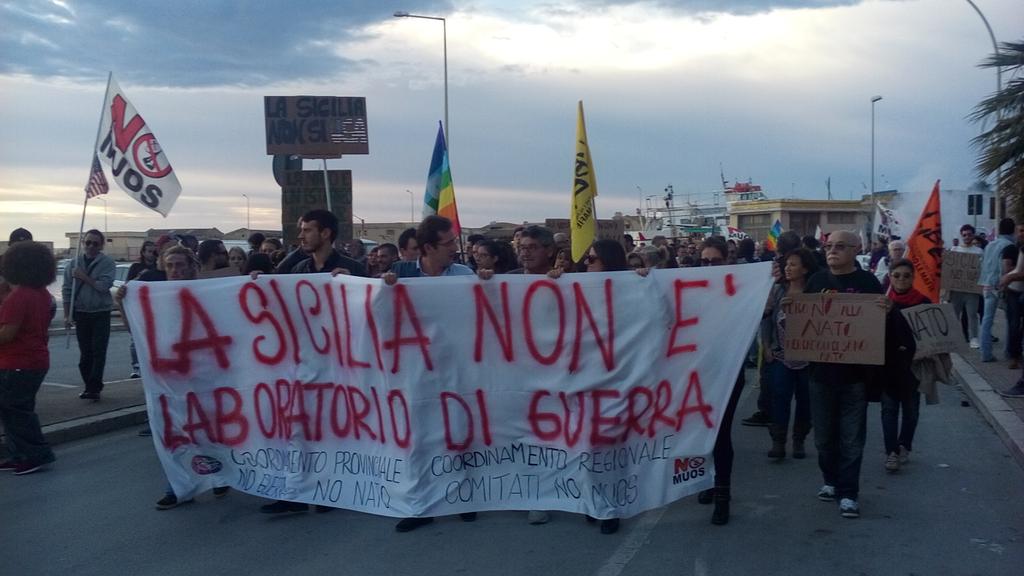
Hundreds of people have taken to the streets of Sicily protesting against Trident Juncture 2015,


‘Sicily is not a war lab!’ Hundreds march against NATO drills (PHOTOS, VIDEO)

© Ruptly
Hundreds of people have taken to the streets of Sicily protesting against Trident Juncture 2015, the largest military maneuvers in more than a decade, which NATO claims are designed to adapt the alliance to “emerging security challenges.”
The protesters marched through the streets of the city of Marsala, less than 10 miles (16km) from Vincenzo Florio Airport. The airport is a base for the 37th Wing of the Italian air force and is one of the forward operating bases (FOBs) used by NATO Airborne Early Warning and Control.


Organized by the “No war, no NATO” group, activists from all corners of the Italian island marched with banners reading “Sicily is not laboratory of the war” and "Sicily is no war zone". People urged the Italian government to better invest in education and the medical sector rather than military activity.


A Marsala bel corteo contro 2015 prova di forza della
Read More Here

Thursday, October 22, 2015

Things Are Getting Scary: Global Police, Precrime and the War on Domestic ‘Extremists’


Commentary


The Rutherford Institute


By John W. Whitehead
October 20, 2015

If you answered yes to any of the above questions, you may be an anti-government extremist (a.k.a. domestic terrorist) in the eyes of the police.

As such, you are now viewed as a greater threat to America than ISIS or al Qaeda.
Let that sink in a moment.

If you believe in and exercise your rights under the Constitution (namely, your right to speak freely, worship freely, associate with like-minded individuals who share your political views, criticize the government, own a weapon, demand a warrant before being questioned or searched, or any other activity viewed as potentially anti-government, racist, bigoted, anarchic or sovereign), you have just been promoted to the top of the government’s terrorism watch list.

I assure you I’m not making this stuff up.

Police agencies now believe the “main terrorist threat in the United States is not from violent Muslim extremists, but from right-wing extremists.”


A New York Times editorial backs up these findings:
Law enforcement agencies around the country are training their officers to recognize signs of anti-government extremism and to exercise caution during routine traffic stops, criminal investigations and other interactions with potential extremists. “The threat is real,” says the handout from one training program sponsored by the Department of Justice. Since 2000, the handout notes, 25 law enforcement officers have been killed by right-wing extremists, who share a “fear that government will confiscate firearms” and a “belief in the approaching collapse of government and the economy.”

So what is the government doing about these so-called terrorists?

The government is going to war.

Again.

Only this time, it has declared war against so-called American “extremists.”


Read More Here