Sunday, December 22, 2013

The American prisons that sterilized female inmates

Journeyman Pictures Journeyman Pictures


Published on Dec 16, 2013
Sterilised behind bars - how have Eugenics programs found their way into the US prison system?

Sterilised behind Bars - How have eugenics programs found their way into US prisons?

For downloads and more information visit: http://www.journeyman.tv/?lid=66340&a...

Eugenics is a concept so universally despised it is hard to imagine its existence in the Western world. But in California the forced sterilization of women in prisons is a terrifying, cruel reality.

"Tubal ligation, what are you talking about? I don't want any procedure. I just want to have my baby", one prisoner says, recounting how she went in to deliver her baby and ended up having a sterilization procedure forced upon her. Between 2006 and 2010 148 women were forced to undergo procedures like this. "We're basically society's trash in a lot of eyes, so it's easy for them to just treat us as such", Misty Rojo, a former inmate of Valley State Women's Prison, says. She argues that the prison system makes it very easy to force through the terrible sterilization procedures, because prisoners learn to just follow orders so that they can get out quickly. "You feel compelled to comply. Because that's what you do in there. It's not very consensual." Crystal, who worked in the infirmary of Dr Heinrich, the main GYN doctor in California, saw first hand how he pressurised women to be sterilized. Dr Heinrich is now being investigated, but so far the hearings to uncover what really happened haven't brought answers.

Centre for Investigative Reporting - ref 6001

Journeyman Pictures is your independent source for the world's most powerful films, exploring the burning issues of today. We represent stories from the world's top producers, with brand new content coming in all the time. On our channel you'll find outstanding and controversial journalism covering any global subject you can imagine wanting to know about.


Enhanced by Zemanta

Saturday, December 21, 2013

Colorado high school shooting victim Claire Davis dies

Colorado high school shooting victim Claire Davis dies

NBC News
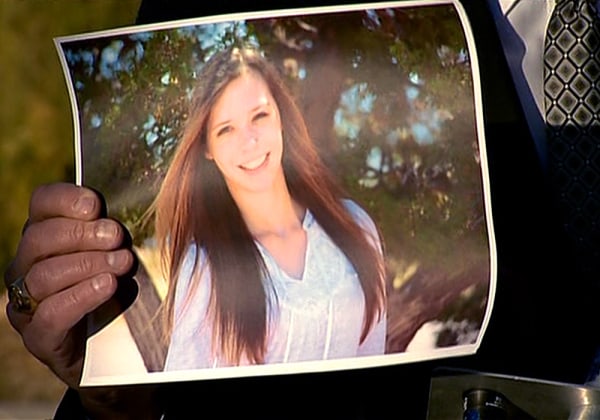
Arapahoe County Sheriff Grayson Robinson holds a picture of Claire Davis, the 17-year-old student who was shot at Arapahoe High School in Centennial, Colo.
The 17-year-old senior who was in a coma after being shot point-blank at a Colorado high school last week died Saturday with her family at her side, hospital officials said.
Claire Esther Davis, a senior at Arapahoe High School in Centennial, Colo., was critically injured when student Karl Halverson Pierson, 18, entered the school building on Dec. 13 armed with a shotgun and Molotov cocktail bombs.
In a statement posted on the Littleton Adventist Hospital's Facebook page, officials said Claire's injuries "were too severe and the most advanced medical treatments could not prevent this tragic loss of life."
The teen passed away at 4:29 p.m. local time (6:29 p.m. ET).

"Claire’s death is immensely heartbreaking for our entire community, our staff and our families," the statement added.
Authorities said Pierson's attack lasted just 80 seconds. Officials believe the teen was angry after losing his coveted spot on the debate team.
"His intent was evil and his evil intent was to harm multiple individuals," Arapahoe County Sheriff Grayson Robinson said last week.
Upon entering the school, Robinson said, Pierson fired one round down the hallway. He then shot Claire, who just happened to be sitting nearby with a friend as he headed toward the library. Claire suffered severe head trauma, which put her in a coma.

Read More Here

Enhanced by Zemanta

Friday, December 20, 2013

DNA from Neanderthal toe reveals interbreeding among ancient species

LA Times  Science

Neanderthal toe bone
This toe bone from a Neanderthal, discovered in Denisova Cave in Siberia, is helping scientists understand interbreeding among species of ancient humans. (Bence Viola / December 18, 2013)

A 50,000-year-old toe bone found in a Siberian cave is giving scientists a surprising view of the breeding habits of early humans.
In what has been described as a “Lord of the Rings”-type world, researchers say that Homo sapiens, Neanderthals and two other groups of early humans mingled and interbred thousands of years before all species but ours became extinct.
The findings were presented Wednesday in the journal Nature by a team of scientists who sequenced the DNA from the Neanderthal toe fossil and compared it to the genomes of 25 present-day humans, as well as the genome of a sister group to Neanderthals called Denisovans.
According to their analysis, Neanderthals contributed roughly 2% of their DNA to modern people outside Africa and half a percent to Denisovans, who contributed 0.2% of their DNA to Asian and Native American people.
The biggest surprise, though, was the finding that a fourth hominin contributed roughly 6% of the DNA in the Denisovan genome. The identity of this DNA donor remains a mystery.
“It is possible that this unknown hominin was what is known from the fossil record as Homo erectus,” said lead study author Kay Prufer, a geneticist at the Max Planck Institute for Evolutionary Anthropology in Leipzig, Germany. “Further studies are necessary to support or reject this possibility.”
Geneticists and anthropologists said the inch-long bone and resulting analysis have greatly illuminated a period of time roughly 12,000 to 126,000 years ago.
“It does seem that Eurasia during the Late Pleistocene was an interesting place to be a hominin, with individuals of at least four quite diverged groups living, meeting and occasionally having sex,” biologist Ewan Birney of the European
Read More Here
.....
Enhanced by Zemanta

Monday, December 16, 2013

The Open Source Solution

corbettreportcorbettreport


Published on Dec 15, 2013
TRANSCRIPT AND SOURCES: http://www.corbettreport.com/?p=8428

As governments and corporations around the world move to make their actions and products ever more opaque, a counter-movement is rallying around the opposite of flag of openness and transparency. Borrowing its metaphor from the programming creed of "open source," this movement is moving beyond the world of bits and bytes to find innovative, collaborative and open solutions to a whole host of problems confronting our everyday lives. Find out more about the open source solution in this week's GRTV Backgrounder.
Enhanced by Zemanta

Berliners Still Fighting to Pull the Plug on Coal-Fired Utility


Citizens in Berlin are fighting to democratize and decentralize the city's energy system, and they've found an unlikely model—in Sacramento, Calif.

Dec 12, 2013
"Pull the plug on Vatenfall."Activists from Energietisch, the organization leading the push to get Berlin to bid for the city's grid, protest in front of Berlin's famous Brandenburg Gate. The large yellow sign reads, "Referendum. New Energy for Berlin. Democratic, Ecological, Social." The small black sign reads, "Pull the Plug on Vatenfall." Credit: UweHiksch, flickr
BERLIN, Germany—A decision 90 years ago by the people of Sacramento, Calif. to oust a private electric company and start a government-owned utility has been the unlikely inspiration for Berliners trying to wrest control of Germany's largest grid from a coal-fired utility.
While little known in America, the creation of Sacramento's Municipal Utility District was the model for a November referendum to give Berlin a municipal utility that would pump more clean energy into the grid. The 1923 vote in Sacramento helped the California city build a rare, green record—constructing the nation's first big solar plant, voting to shut down a nuclear reactor and approving a goal of slashing climate-changing emissions by 90 percent by 2050.
"Sacramento stopped nuclear with direct elections," said Stefan Taschner, spokesperson for Energietisch, the group behind the push to take over Berlin's grid. It provides the "best example of democratic control."
Berlin's referendum failed by a tiny margin—but it's not the end of the story. The contract to operate the grid expires at the end of next year, and the near-approval sent a strong message to the mayor and other officials that the city should buy the contract. The referendum needed 25 percent of Berlin's 2.5 million registered voters to pass; it missed that mark by less than 1 percent.
It seems unlikely that Berliners would look to Sacramento, or anywhere but their own country, for a model on how to build a greener grid—given that Germany is driving the world's most aggressive clean energy transformation. But Berlin has been largely left out of the shift, and activists here have been scrambling for tactics to limit influence of corporate fossil fuel interests. Less than 2 percent of the electricity produced in Berlin comes from renewables, compared to 25 percent in Germany overall.
The vast majority of Berlin's electricity is coal-fired and generated by energy giant Vattenfall, whose parent company won a contract in 1994 to operate the grid for 20 years.
Ending the privatization of energy is a major part of the Energiewende, Germany's plan to transition to renewables from fossil fuels and nuclear. A 2000 law gave citizens incentives to produce their own clean power and compete with utilities. As a result, 51 percent of the country's renewable power capacity is now owned by individuals who have built solar on rooftops and wind turbines on farms. That has left Germany's "Big Four" utilities, including Vattenfall, with just a sliver—6.5 percent—of this burgeoning sector.
Read More Here
Enhanced by Zemanta

Thursday, December 12, 2013

Thursday, December 5, 2013

Nelson Mandela Dead at the age of 95

Nelson Mandela dead at 95


/
View images of civil rights leader Nelson Mandela, who went from anti-apartheid activist to prisoner to South Africa's first black president.
Nelson Mandela, the revered South African anti-apartheid icon who spent 27 years in prison, led his country to democracy and became its first black president, died Thursday at home. He was 95.
"He is now resting," said South African President Jacob Zuma. "He is now at peace."
"Our nation has lost his greatest son," he continued. "Our people have lost their father."
A state funeral will be held, and Zuma called for mourners to conduct themselves with "the dignity and respect" that Mandela personified.
"Wherever we are in the country, wherever we are in the world, let us reaffirm his vision of a society… in which none is exploited, oppressed or dispossessed by another," he said as tributes began pouring in from across the world.

Though he was in power for only five years, Mandela was a figure of enormous moral influence the world over – a symbol of revolution, resistance and triumph over racial segregation.
He inspired a generation of activists, left celebrities and world leaders star-struck, won the Nobel Peace Prize and raised millions for humanitarian causes.
South Africa is still bedeviled by challenges, from class inequality to political corruption to AIDS. And with Mandela’s death, it has lost a beacon of optimism.
Feb. 1990: NBC's Robin Lloyd reports on Nelson Mandela on the eve of his release from prison in 1990. Mandela's name has become a rallying cry for the overthrow of apartheid, but no one but prison guards and visitors have actually seen him since he was jailed 27 years ago.
In his jailhouse memoirs, Mandela wrote that even after spending so many years in a Spartan cell on Robben Island – with one visitor a year and one letter every six months – he still had faith in human nature.
“No one is born hating another person because of the color of his skin, or his background, or his religion,” he wrote in “Long Walk to Freedom.”
“People must learn to hate, and if they can learn to hate, they can be taught to love, for love comes more naturally to the human heart than its opposite.”
Mandela retired from public life in 2004 with the half-joking directive, “Don’t call me, I’ll call you,” and had largely stepped out of the spotlight, spending much of his time with family in his childhood village.
His health had been fragile in recent years. He had spent almost three months in a hospital in Pretoria after being admitted in June for a recurring lung infection. He was released on Sept. 1.
In his later years, Mandela was known to his countrymen simply as Madiba, the name of his tribe and a mark of great honor. But when he was born on July 18, 1918, he was named Rolihlahla, which translated roughly – and prophetically – to “troublemaker.”
Mandela was nine when his father died, and he was sent from his rural village to the provincial capital to be raised by a fellow chief. The first member of his family to get a formal education, he went to boarding school and then enrolled in South Africa’s elite Fort Hare University, where his activism unfurled with a student boycott.
As a young law scholar, he joined the resurgent African National Congress just a few years before the National Party – controlled by the Afrikaners, the descendants of Dutch and French settlers – came to power on a platform of apartheid, in which the government enforced racial segregation and stripped non-whites of economic and political power.
As an ANC leader, Mandela advocated peaceful resistance against government discrimination and oppression – until 1961, when he launched a military wing called Spear of the Nation and a campaign of sabotage.
April, 1994: Former political prisoner Nelson Mandela is on the verge of being elected South Africa's first black president.
The next year, he was arrested and soon hit with treason charges. At the opening of his trial in 1964, he said his adoption of armed struggle was a last resort born of bloody crackdowns by the government.
“Fifty years of non-violence had brought the African people nothing but more and more repressive legislation and fewer and few rights,” he said from the dock.
“I have cherished the ideal of a democratic and free society in which all persons live together in harmony and with equal opportunities. It is an ideal for which I hope to live for and achieve. But if needs be, it is an ideal for which I am prepared to die.”

Read More Here

..........

Nelson Mandela Dead at 95

The New York Times The New York Times


Published on Dec 5, 2013
Subscribe on YouTube: http://bit.ly/U8Ys7n
Nelson Mandela, who led the emancipation of South Africa from white minority rule and served as his country's first black president, died at 95.
Read the story: http://nyti.ms/1jrjEyE
..........


Enhanced by Zemanta